

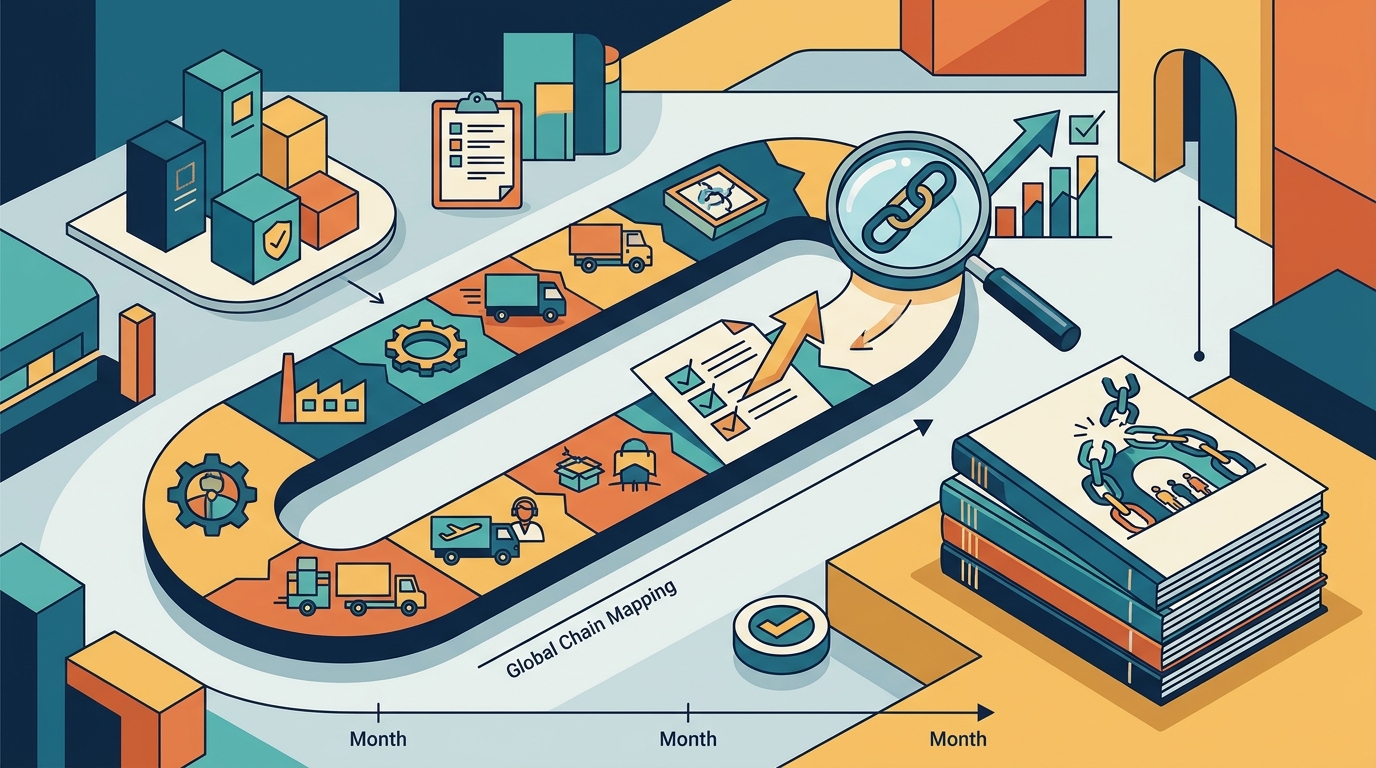
Completing a modern slavery audit in Australia involves a structured sequence of risk assessment, supply chain mapping, and reporting. The process typically begins with internal governance and ends with the submission of a Statement on Modern Slavery. For many organizations, this journey takes between three to six months to complete thoroughly. The Freedom Hub supports this process by ensuring that survivor voices and ethical business practices are central to the audit framework, moving beyond mere compliance to genuine impact. according to Modern slavery in
Phase 1: Establishing Governance and Policy
The first step in the audit process is establishing a clear governance structure. Modern slavery due diligence is a systematic process for identifying, preventing, and mitigating risks in operations and supply chains. Without a dedicated policy, audits lack a baseline for measurement. Companies must appoint a senior executive responsible for modern slavery compliance. This individual oversees the audit team and ensures accountability at the board level.
Organizations should draft a Modern Slavery Policy that outlines their commitment to ethical sourcing. This document serves as the foundation for all subsequent audit activities. It defines the scope of the audit, including which parts of the supply chain are covered. The policy must align with the requirements of the Modern Slavery Act 2018. This alignment ensures that the audit meets legal standards while reflecting the company's values.
Defining the Audit Scope
Phase 2: Supply Chain Mapping and Risk Assessment
Conducting the Risk Assessment
Phase 3: Supplier Engagement and Verification
After identifying risks, the audit process moves to supplier engagement. Supplier engagement is the direct communication with suppliers to address identified risks and request corrective actions. This phase is often the most challenging. Suppliers may be resistant to change or lack the resources to implement improvements. The audit team must negotiate with suppliers to develop action plans. These plans should be specific, measurable, and time-bound.
Verification is among the next critical step. The audit team must verify that suppliers are implementing their action plans. This can be done through follow-up questionnaires, third-party audits, or on-site inspections. Verification ensures that the risks are being mitigated effectively. It also builds trust with suppliers. The Freedom Hub stresses that this phase should be collaborative rather than punitive. The goal is to improve conditions, not to punish suppliers for past failures.
Implementing Corrective Actions
Phase 4: Reporting and Statement Submission
The final phase of the audit process is reporting. The audit team compiles all findings into a Statement on Modern Slavery. This statement is a public document that outlines the company's actions to address modern slavery. It must be approved by the board and signed by a director. The statement is then lodged with the Australian Border Force. It is published on the company's website. This transparency is a key requirement of the Modern Slavery Act. according to The Audit Process
Reporting is not just a compliance exercise. It is an opportunity to demonstrate the company's commitment to ethical business. The statement should be clear, concise, and honest. It should highlight both successes and challenges. The Freedom Hub encourages companies to use this platform to share stories of survivors and their recovery. This humanizes the issue and inspires others to take action.
Continuous Improvement
Continuous improvement is the ongoing aspect of the audit process. The audit is not a one-time event. It is a cycle of assessment, action, and review. Companies must update their risk assessments and supplier engagements regularly. This ensures that the audit remains relevant and effective. The Freedom Hub supports this continuous cycle by providing training and resources for businesses. It helps them to embed ethical practices into their core operations.
Key Takeaways
- Establishing governance and policy is the foundation of a successful modern slavery audit.
- Supply chain mapping and risk assessment are critical for identifying high-risk areas.
- Supplier engagement and verification ensure that corrective actions are implemented effectively.
- Reporting and statement submission are mandatory under the Modern Slavery Act 2018.
- Continuous improvement is essential for maintaining ethical standards over time.
- The Freedom Hub supports this process by integrating survivor voices and ethical business practices.
Frequently Asked Questions
How long does a modern slavery audit take?
A modern slavery audit typically takes between three to six months to complete. The duration depends on the complexity of the supply chain and the number of suppliers involved. Larger organizations with global supply chains may take longer. Smaller businesses with simpler supply chains may complete the process faster.
Who is responsible for the modern slavery audit?
What is the role of the Freedom Hub in the audit process?
The Freedom Hub supports the audit process by providing training and resources for businesses. It ensures that survivor voices are central to the audit framework. The Hub also offers ethical business services that help companies embed sustainable pathways to freedom. Its involvement adds depth and authenticity to the audit.
Do many suppliers need to be audited?
No, not many suppliers need to be audited. The audit should focus on high-risk areas of the supply chain. Companies should prioritize suppliers in high-risk countries or industries. This targeted approach ensures that resources are used effectively. It also allows for deeper scrutiny of critical suppliers.
What happens if a supplier refuses to cooperate?
If a supplier refuses to cooperate, the company must consider terminating the relationship. The Modern Slavery Act encourages companies to take action against non-compliant suppliers. However, the decision should be made carefully. The company should document its efforts to engage the supplier. This documentation is important for the final statement.
How often should the audit be repeated?
The audit should be repeated annually. The Modern Slavery Act requires companies to submit a statement every year. This annual cycle ensures that the company remains compliant and continues to improve. It also allows for the identification of new risks. The Freedom Hub encourages companies to view this as a continuous improvement process.