

A modern slavery risk assessment is a structured process that identifies, evaluates, and mitigates the risk of human rights abuses in your supply chain and operations. For Australian businesses, this is not just a compliance checkbox but a critical step in ethical sourcing. The Freedom Hub emphasizes that effective assessments must be survivor-informed, ensuring that the people most affected by exploitation have a voice in how risks are identified and managed. This approach moves beyond theoretical models to practical, human-centered solutions.
Defining the Scope of Your Assessment
Identifying High-Risk Sectors
Certain industries are inherently more prone to exploitation. Agriculture, construction, and manufacturing are often cited as high-risk sectors. By identifying these areas early, you can prioritize your due diligence efforts. This targeted approach ensures that your resources are focused where they are needed most.
Conducting a Supply Chain Audit
Once the scope is defined, the next step is conducting a supply chain audit. This involves gathering data from suppliers to understand their labor practices. You can use questionnaires, site visits, or third-party audits to collect this information. The key is to ask the right questions. For instance, do workers have valid contracts? Are they paid at least the minimum wage? Do they have the freedom to leave? The Freedom Hub's Survivor School trains survivors to understand these dynamics, providing a unique perspective on what to look for during an audit.
The Role of Third-Party Audits
Third-party audits can provide an independent view of your supply chain. However, they are not a substitute for your own due diligence. You must verify the findings and ensure that the audit covers many relevant aspects of labor rights. A single audit is not enough; you need a continuous monitoring process.
Evaluating and Scoring Risks
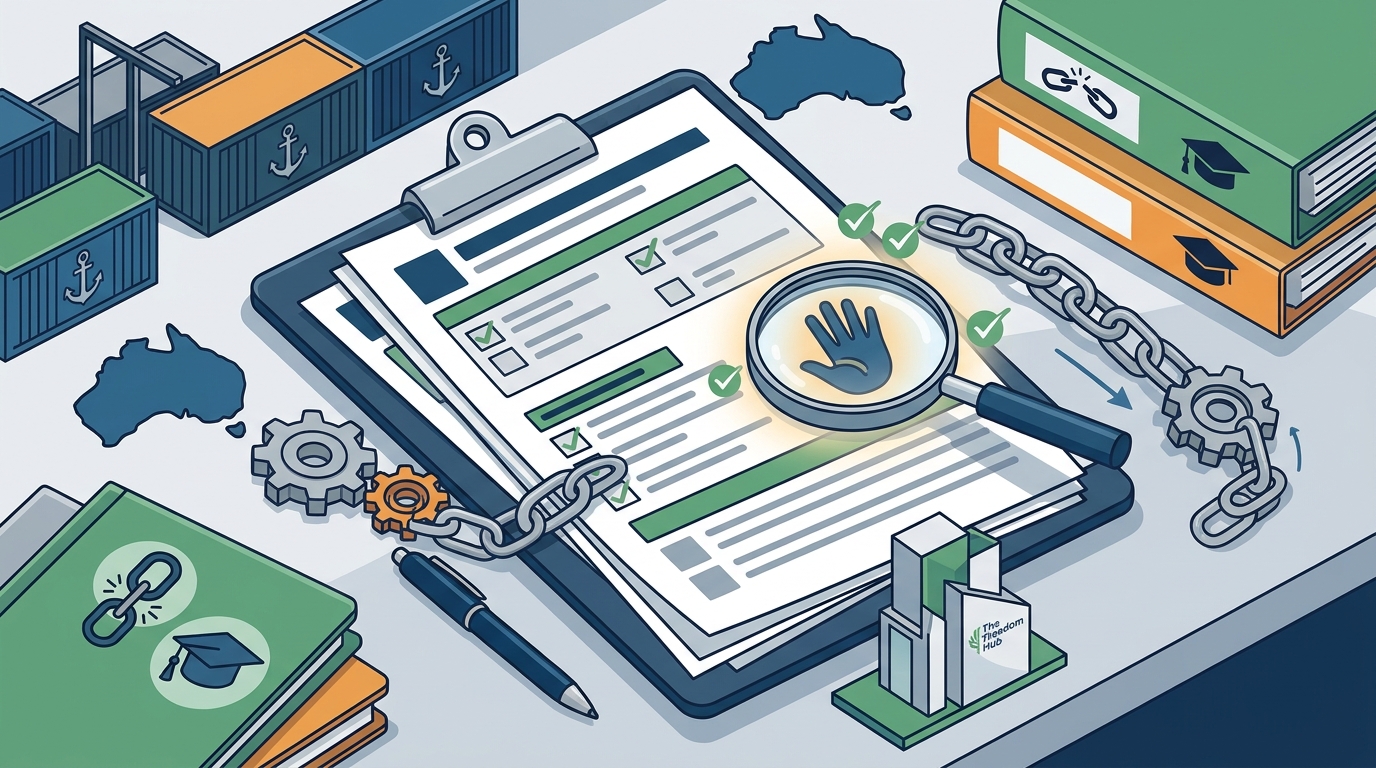
After collecting data, you need to evaluate and score the risks. This involves assessing the likelihood and impact of potential abuses. You can use a risk matrix to categorize risks as low, medium, or high. High-risk areas require immediate action. For example, if a supplier is found to be using forced labor, this is a critical risk that must be addressed. The Freedom Hub recommends involving survivors in this evaluation process to ensure that the risks are understood from the perspective of those who have experienced them.
Using a Risk Matrix
A risk matrix is a simple tool that helps you visualize your risks. It plots the likelihood of an event against its impact. This allows you to prioritize your mitigation efforts. By using a consistent scoring system, you can track your progress over time and demonstrate your commitment to ethical sourcing.
Implementing Mitigation Strategies
Once risks are identified and scored, you need to implement mitigation strategies. This could involve working with suppliers to improve their labor practices, switching to a different supplier, or terminating a relationship. The key is to be proactive and transparent. The Freedom Hub advocates for a collaborative approach, where businesses work with suppliers to address issues rather than simply cutting them off. This ensures that workers are not left without support. For example, if a supplier is found to be underpaying workers, you can work with them to implement a fair wage policy.
Engaging Survivors in Mitigation
Reporting and Continuous Improvement
The final step in the risk assessment process is reporting and continuous improvement. You need to document your findings and actions taken. This report can be shared with stakeholders, including customers, investors, and regulators. It demonstrates your commitment to ethical sourcing and helps you build trust. The Freedom Hub encourages businesses to use their reports as a tool for continuous improvement. By regularly reviewing your risk assessment, you can identify new risks and update your strategies accordingly. This ongoing process ensures that your business remains resilient and ethical.
Building a Culture of Ethical Sourcing
Building a culture of ethical sourcing is essential for long-term success. This involves training your employees, engaging your suppliers, and communicating your values to your customers. The Freedom Hub's Survivor School provides training that can help your employees understand the realities of modern slavery. By fostering a culture of awareness and responsibility, you can create a sustainable business model that benefits everyone.
Key Takeaways
- Define your scope: Map your supply chain to identify high-risk sectors and geographies.
- Conduct audits: Use questionnaires, site visits, or third-party audits to gather data on labor practices.
- Score your risks: Use a risk matrix to evaluate the likelihood and impact of potential abuses.
- Implement mitigation: Work with suppliers to address issues and support workers.
- Report and improve: Document your findings and use them to drive continuous improvement.
- Engage survivors: Involve survivors in the assessment and mitigation process to ensure practical, human-centered solutions.
Frequently Asked Questions
What is a modern slavery risk assessment?
A modern slavery risk assessment is a structured process that identifies, evaluates, and mitigates the risk of human rights abuses in your supply chain and operations.
Why is a survivor-informed approach important?
A survivor-informed approach ensures that the people most affected by exploitation have a voice in how risks are identified and managed, leading to more practical and effective solutions.
How often should I conduct a risk assessment?
You should conduct a risk assessment regularly, at least annually, and whenever there are significant changes in your supply chain or operations.
What are the high-risk sectors for modern slavery?
How can I engage survivors in my risk assessment?
You can engage survivors by involving them in the evaluation and mitigation processes, ensuring that their insights inform your strategies. Learn more: Contact Us The Freedom.