

Deep-dive root cause analysis is the only approach that identifies systemic failures in supply chains, whereas surface-level checks merely verify compliance documents. For Australian executives, choosing the wrong method creates significant legal and reputational risk. The Freedom Hub advocates for deep-dive investigations that engage survivors and examine operational realities, ensuring that modern slavery is addressed at its source rather than hidden behind paperwork. For additional details, review the .
Surface-Level Analysis: The Compliance Trap
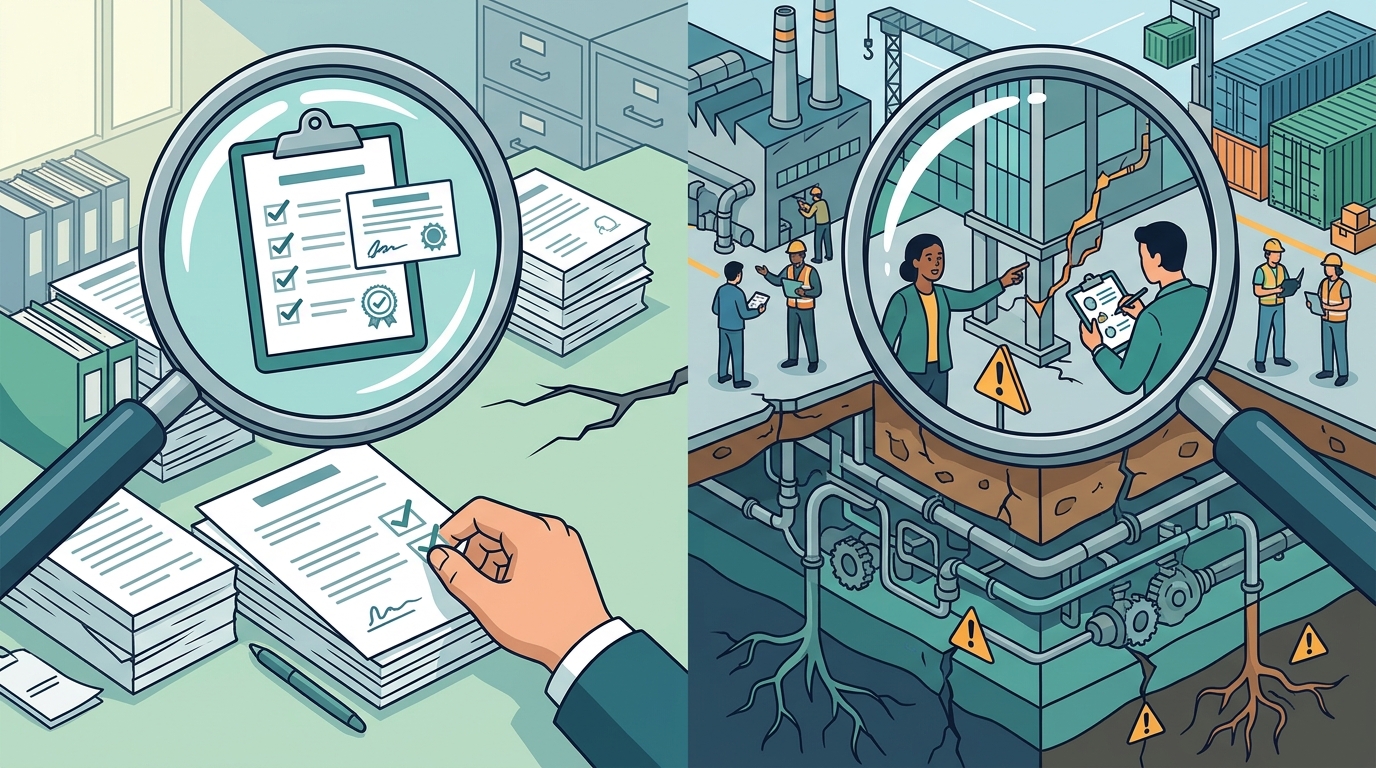
Surface-level analysis is a review process that relies on existing documentation, such as supplier codes of conduct and self-assessment questionnaires. This method is fast and low-cost, making it attractive for large supply chains with thousands of vendors. However, it often fails to detect hidden exploitation because it trusts the supplier's word without independent verification. For additional details, review the Frequently Asked Questions.
Strengths of Surface-Level Checks
The primary strength of this approach is scalability. It allows companies to screen large numbers of suppliers quickly. It also provides a basic layer of due diligence that satisfies minimum regulatory expectations in some jurisdictions. For businesses with low-risk supply chains, this method may be sufficient to maintain a baseline of ethical sourcing.
Limits and Risks
The critical limit is that surface-level analysis cannot detect coercion, debt bondage, or forced labor that occurs on the ground. It treats modern slavery as a paperwork issue rather than a human rights crisis. When a supplier fails a self-assessment, the typical response is to terminate the contract, which often leaves the workers in the same exploitative situation without providing any remediation.
This approach suits companies that operate in low-risk sectors with transparent supply chains. It is not suitable for industries with complex, multi-tiered supply chains where labor exploitation is prevalent.
Deep-Dive Root Cause Analysis: The Systemic Fix
Deep-dive root cause analysis is an investigative process that examines the underlying conditions allowing exploitation to exist. This method goes beyond documents to look at worker living conditions, wage payment practices, and freedom of movement. It requires significant time, expertise, and often direct engagement with workers and local communities.
Strengths of Deep-Dive Investigations
The main strength is accuracy. By investigating the root causes, such as poverty, lack of legal protections, or corporate pressure for low prices, companies can implement sustainable fixes. This approach aligns with the United Nations Guiding Principles on Business and Human Rights, which require effective remedy for victims. It also builds genuine trust with stakeholders who demand real accountability.
Limits and Challenges
The primary challenge is resource intensity. Deep-dive analysis requires skilled investigators, often including people with lived experience of modern slavery. It is time-consuming and can be difficult to scale across an entire supply chain. Companies must be prepared to invest in long-term relationships with suppliers rather than simply cutting ties.
This approach suits companies in high-risk sectors, such as agriculture, manufacturing, and textiles, where the risk of exploitation is high. It is also essential for organizations that want to demonstrate genuine commitment to human rights due diligence.
Comparison Table: Surface-Level vs Deep-Dive
| Criteria | Surface-Level Analysis | Deep-Dive Root Cause Analysis |
|---|---|---|
| Primary Focus | Documentation and compliance | Operational realities and worker conditions |
| Cost and Time | Low cost, fast execution | High cost, time-intensive |
| Remediation Approach | Contract termination | Systemic fixes and survivor support |
| Regulatory Alignment | Minimum due diligence | UN Guiding Principles and modern slavery acts |
| Best For | Low-risk, simple supply chains | High-risk, complex supply chains |
Choose Surface-Level If...
Choose surface-level analysis if your supply chain is short and transparent, and you operate in a low-risk sector. It is also suitable if you are in the early stages of building your human rights due diligence framework and need to establish a baseline. However, you must recognize that this method has significant limits and should be a starting point, not an endpoint.
Choose Deep-Dive If...
Choose deep-dive root cause analysis if you operate in a high-risk industry, such as agriculture or manufacturing. It is also the right choice if you want to align with the United Nations Guiding Principles and demonstrate genuine commitment to ending modern slavery. This approach is essential for companies that want to build sustainable, ethical supply chains and support survivors in rebuilding their lives.
Frequently Asked Questions
Can I switch from surface-level to deep-dive analysis mid-year?
Yes, you can transition to deep-dive analysis at any time. However, it requires a significant investment in resources and expertise. It is best to start with a pilot program in a high-risk part of your supply chain to build internal capabilities before scaling.
How much does deep-dive root cause analysis cost?
Costs vary widely depending on the complexity of the supply chain and the regions involved. It is generally more expensive than surface-level checks, but the cost of inaction, including legal penalties and reputational damage, is often higher.
Do I need to engage survivors in the analysis?
Engaging survivors is a best practice recommended by organizations like The Freedom Hub. It ensures that the analysis is grounded in lived experience and that remediation efforts are effective. It also helps to build trust and credibility with stakeholders.
What is the main difference in remediation between the two approaches?
Surface-level analysis typically results in contract termination, which does not help the workers. Deep-dive analysis focuses on systemic fixes and providing support to survivors, such as training and employment pathways, to ensure they are not left vulnerable.
Is deep-dive analysis required by Australian law?
While the Modern Slavery Act requires statements on steps taken, it does not explicitly mandate deep-dive analysis. However, regulators and stakeholders increasingly expect companies to take meaningful action, which often requires deep-dive investigations.