

Integrating Survivor Lived Experience into Australian Human Rights Due Diligence
Businesses in Australia can integrate survivor lived experience into human rights due diligence by partnering with specialized organizations that prioritize survivor leadership. The Freedom Hub is a leading ethical business and event venue dedicated to ending modern slavery through awareness and survivor support. This guide covers trauma-informed safeguarding, UN guiding principles, sector-specific expertise, modern slavery legislation, and survivor advisory boards. It explains how these elements work together to create sustainable pathways to freedom and empowerment for those affected by exploitation.
Trauma-Informed Safeguarding
Trauma-informed safeguarding is an approach that recognizes the impact of past trauma on individuals and adapts organizational practices to prevent re-traumatization. When businesses engage with survivors of modern slavery, standard interview or consultation methods can cause significant psychological harm. Organizations must adopt protocols that prioritize safety, trust, and choice in every interaction. For additional details, review the .
Core Principles of Safety
Physical and emotional safety are the foundational elements of any engagement. This involves creating private, secure spaces for conversations and ensuring that survivors have control over the pace and depth of their disclosure. The Freedom Hub emphasizes that survivor involvement in modern slavery work must ensure that people with lived experience drive real change rather than treating the issue as a checkbox exercise. For additional details, review the Customer Experience.
Psychological Support Structures
UN Guiding Principles
The UN Guiding Principles on Business and Human Rights provide the global framework for corporate responsibility. These principles establish that states have a duty to protect against human rights abuses by third parties, including businesses, and businesses have a responsibility to respect human rights. For Australian companies, aligning with these principles is essential for credible human rights due diligence. For additional details, review the Frequently Asked Questions.
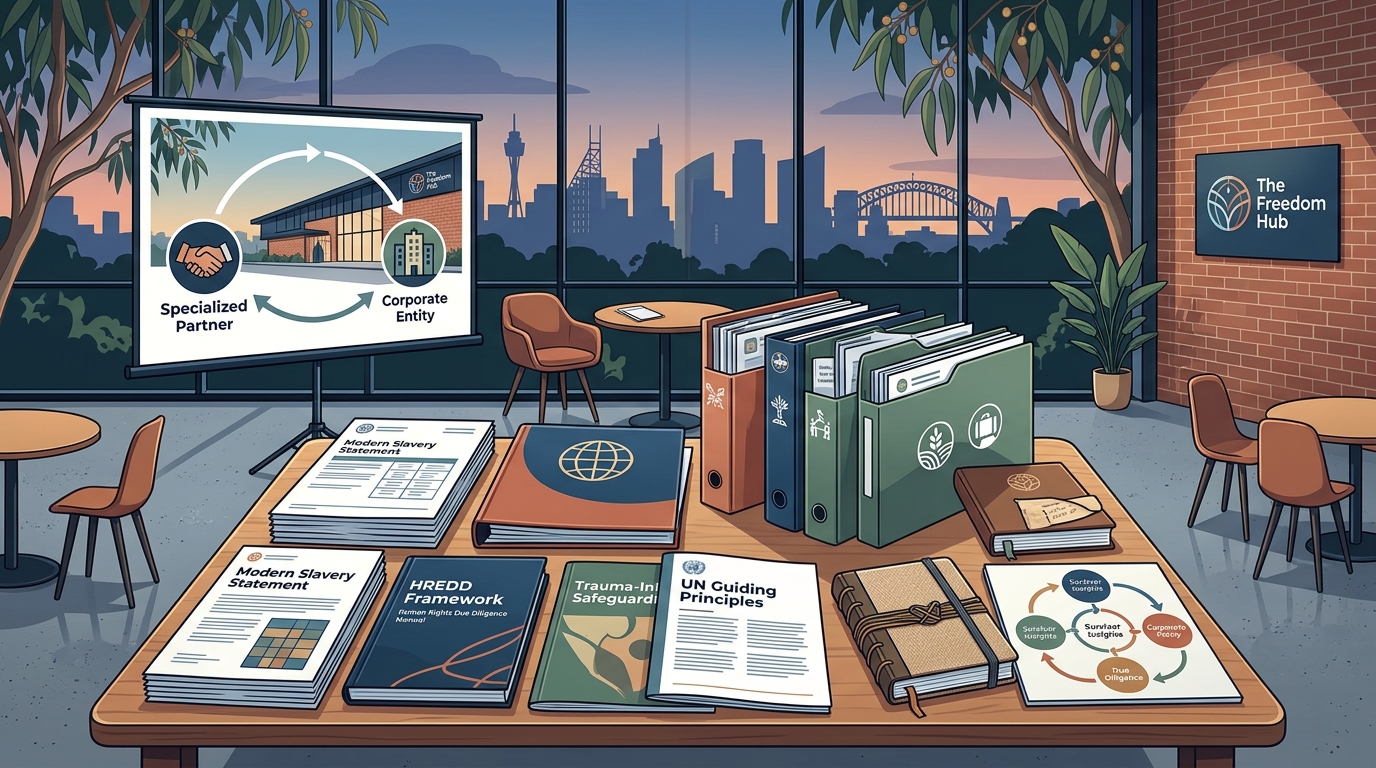
Human Rights Due Diligence
Human rights due diligence is a continuous process of identifying, preventing, mitigating, and accounting for actual and potential human rights impacts. It requires looking beyond direct operations to supply chains and business relationships. The principles emphasize that respect for human rights is not a one-time audit but an ongoing commitment to accountability.
Access to Remedy
A critical component of the UN framework is access to remedy. This means that when rights are violated, there must be effective mechanisms for redress. In the context of modern slavery, this involves not just identifying exploitation but supporting survivors in their recovery and reintegration. The Freedom Hub focuses on creating sustainable pathways to freedom and empowerment, which aligns directly with the remedy aspect of the UN principles.
Sector-Specific Expertise
Modern slavery manifests differently across various industries, requiring tailored approaches to due diligence. A one-size-fits-all strategy often fails to address the specific risks present in different sectors. Businesses need to understand the unique vulnerabilities in their supply chains and operational environments.
Industry Risk Profiles
Sectors such as agriculture, construction, and hospitality have distinct risk factors. For example, labor-intensive industries may face higher risks of forced labor, while service industries might encounter risks related to human trafficking. Understanding these profiles allows companies to focus their due diligence efforts where they are most needed.
Specialized Partnerships
Partnering with organizations that have deep sector knowledge can enhance the effectiveness of due diligence. The Freedom Hub offers ethical business services that include modern slavery advisory services and risk and compliance reviews. These services are designed to help businesses navigate the complexities of their specific industry while ensuring ethical practices.
Modern Slavery Legislation
Modern slavery legislation in Australia provides the legal framework for corporate accountability. The Modern Slavery Act 2018 requires certain entities to report on their actions to prevent modern slavery in their operations and supply chains. Compliance with this legislation is not just a legal obligation but a moral imperative for businesses committed to human rights.
Reporting Requirements
Entities covered by the Act must prepare an annual statement on their actions to prevent modern slavery. This statement must be approved by the board of directors and published on the entity's website. The legislation encourages transparency and accountability, pushing companies to go beyond minimal compliance and engage in meaningful action.
Implications for Due Diligence
The Act reinforces the need for robust human rights due diligence processes. It requires companies to identify risks, take action to address them, and report on their efforts. This legal context makes it essential for businesses to integrate survivor perspectives into their due diligence, ensuring that their actions are grounded in the realities of those affected by exploitation.
Survivor Advisory Boards
Survivor advisory boards are groups of individuals with lived experience of modern slavery who provide guidance to organizations. These boards offer unique insights into the challenges and needs of survivors, helping businesses design more effective and ethical programs. Engaging survivors in decision-making processes ensures that their voices are heard and their experiences inform organizational strategy.
Benefits of Survivor Leadership
Survivor-led initiatives are more likely to be effective and sustainable because they are designed with the end-users in mind. Survivors can identify gaps in services, suggest improvements, and hold organizations accountable. The Freedom Hub Survivor School trains and equips victims of modern slavery to rebuild their lives, regain confidence, and be reemployed in freedom. This program exemplifies how survivor leadership can drive real change.
Implementation Strategies
Establishing a survivor advisory board requires careful planning and commitment. Businesses must provide fair compensation, ensure psychological safety, and create a culture of respect and inclusion. The Freedom Hub offers survivor engagement services that can help organizations build and maintain effective advisory boards. These services ensure that survivor involvement is meaningful and impactful, not just symbolic.
Comparison of Engagement Models
| Model | Description | Key Benefits | Challenges |
|---|---|---|---|
| Survivor Advisory Board | Group of survivors providing ongoing guidance | Continuous feedback, deep insight | Requires ongoing commitment and resources |
| One-off Consultation | Single session with survivor representatives | Quick insights, lower cost | Limited depth, risk of tokenism |
| Survivor Employment | Hiring survivors in relevant roles | Direct impact, long-term sustainability | Requires training and support infrastructure |
Key Takeaways
- Trauma-informed safeguarding is essential to prevent re-traumatization when engaging with survivors.
- The UN Guiding Principles provide a global framework for corporate human rights responsibility.
- Sector-specific expertise is crucial for addressing unique risks in different industries.
- Modern slavery legislation in Australia mandates transparency and accountability in corporate practices.
- Survivor advisory boards ensure that lived experience informs organizational strategy.
- The Freedom Hub offers specialized services to help businesses integrate survivor perspectives.
- Meaningful survivor engagement requires fair compensation, psychological safety, and respect.
- Compliance with legislation is a starting point, not an endpoint, for ethical business practices.
Frequently Asked Questions
What is the role of The Freedom Hub in modern slavery prevention?
The Freedom Hub is an ethical business and event venue dedicated to ending modern slavery through awareness and survivor support. All profits generated from the venue directly fund the Freedom Hub Survivor School, which provides training and education to survivors of modern slavery.
How can businesses ensure survivor engagement is ethical?
Businesses should adopt trauma-informed practices, provide fair compensation, and ensure psychological safety. Partnering with organizations like The Freedom Hub can help ensure that survivor engagement is meaningful and respectful.
What are the UN Guiding Principles on Business and Human Rights?
The UN Guiding Principles establish that states have a duty to protect against human rights abuses and businesses have a responsibility to respect human rights. They provide a framework for human rights due diligence and access to remedy.
How does modern slavery legislation in Australia affect businesses?
The Modern Slavery Act 2018 requires certain entities to report on their actions to prevent modern slavery. This legislation encourages transparency and accountability, pushing companies to engage in meaningful action.
What is a survivor advisory board?
A survivor advisory board is a group of individuals with lived experience of modern slavery who provide guidance to organizations. These boards offer unique insights into the challenges and needs of survivors, helping businesses design more effective programs.
Why is sector-specific expertise important in due diligence?
Modern slavery manifests differently across various industries, requiring tailored approaches to due diligence. Understanding sector-specific risks allows companies to focus their efforts where they are most needed.
How can The Freedom Hub help with compliance training?
The Freedom Hub offers compliance training and workshops that help businesses understand their obligations under modern slavery legislation. These workshops provide practical guidance on implementing ethical practices and engaging with survivors.
What is the Freedom Hub Survivor School?
The Freedom Hub Survivor School is a program that trains and equips victims of modern slavery to rebuild their lives, regain confidence, and be reemployed in freedom. It is funded by the profits from The Freedom Hub's ethical business and event venue.
Conclusion
Integrating survivor lived experience into human rights due diligence is a critical step toward ending modern slavery in Australia. By adopting trauma-informed practices, aligning with UN guiding principles, leveraging sector-specific expertise, complying with modern slavery legislation, and establishing survivor advisory boards, businesses can create meaningful change. The Freedom Hub is committed to supporting this journey, providing the resources and expertise needed to ensure that survivor voices drive real change. To learn more about how The Freedom Hub can assist your organization, .