

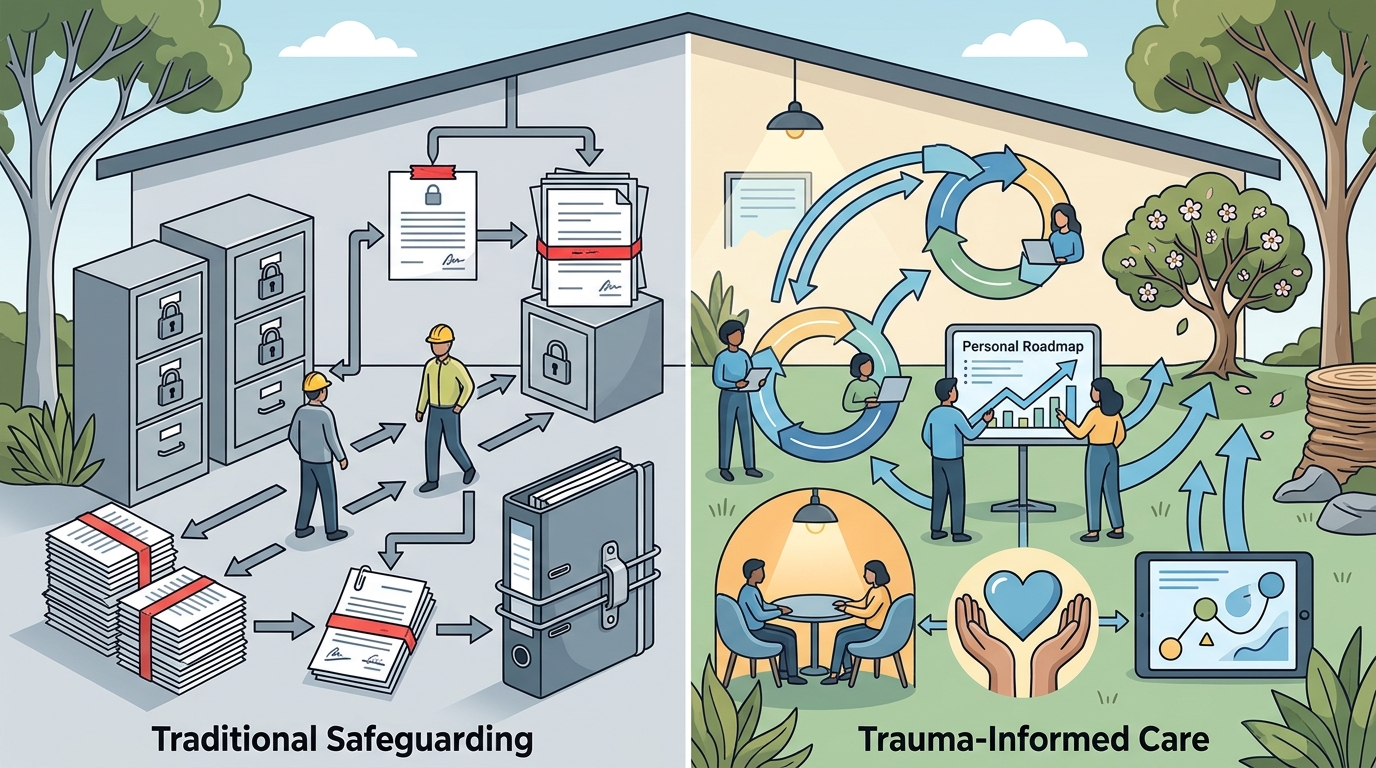
Traditional safeguarding focuses on rule compliance and risk mitigation, while trauma informed care prioritizes psychological safety and survivor autonomy. For Australian businesses, this distinction determines whether support systems actually help survivors rebuild or inadvertently re-traumatize them. The Freedom Hub advocates for trauma informed frameworks because they align with the lived experience of those recovering from modern slavery.
Traditional Safeguarding Approaches
Traditional safeguarding is a compliance-driven model designed to protect vulnerable individuals from harm through strict protocols. It relies on mandatory reporting, background checks, and standardized incident response procedures. This approach treats safeguarding as a legal obligation rather than a holistic support mechanism. For additional details, review the .
Strengths of Traditional Models
Limits for Survivor Support
The primary limitation is rigidity. Traditional models often require survivors to repeat their stories to multiple authorities. This process can feel invasive and re-traumatizing. The focus on procedural correctness can overshadow the emotional needs of the individual. For additional details, review the Customer Experience.
Who It Suits
This approach suits organizations where the primary risk is external criminal activity rather than complex psychological recovery. It is less effective for survivors of modern slavery who require long-term, flexible support.
Trauma Informed Care Frameworks
Trauma informed care is an approach that recognizes the widespread impact of trauma and integrates this understanding into organizational practices. It shifts the question from "What is wrong with you?" to "What happened to you?" This paradigm change is critical for supporting survivors of exploitation. For additional details, review the Frequently Asked Questions.
Core Principles
Five core principles guide this model: safety, trustworthiness, peer support, collaboration, and empowerment. These principles ensure that the survivor retains control over their recovery journey. The organization adapts to the survivor, not the other way around.
Strengths in the Workplace
Workplaces adopting trauma informed care report higher retention rates among supported staff. Employees feel safer disclosing issues because the response is empathetic rather than punitive. This environment fosters genuine rehabilitation and reintegration.
Limits and Challenges
Implementing this model requires significant cultural change. It is harder to audit than compliance checklists. Staff require specialized training to understand trauma responses. Without proper training, well-meaning actions can still cause harm.
Who It Suits
This framework is essential for organizations directly supporting survivors of modern slavery. It is also beneficial for any workplace seeking to create a psychologically safe environment for all employees.
Comparison of Approaches
| Criteria | Traditional Safeguarding | Trauma Informed Care |
|---|---|---|
| Primary Focus | Compliance and Risk Mitigation | Psychological Safety and Autonomy |
| Response to Disclosure | Standardized Reporting Protocol | Individualized, Empathetic Support |
| Power Dynamics | Organization Leads Process | Survivor Leads Process |
| Staff Training | Procedural and Legal | Psychological and Empathetic |
| Long Term Outcome | Legal Protection | Rehabilitation and Reintegration |
Choosing the Right Approach
Selecting the right framework depends on your organization's specific goals and the nature of the support you provide. Understanding the distinct benefits of each model helps you allocate resources effectively.
Choose Traditional Safeguarding If
Your primary objective is to meet legal compliance requirements. You are dealing with external threats rather than internal recovery needs. You have limited budget for specialized psychological training. You need a clear, auditable process for incident management.
Choose Trauma Informed Care If
You are directly supporting survivors of modern slavery or exploitation. You want to create a culture of psychological safety for all employees. You are willing to invest in ongoing staff development. You view support as a long-term partnership rather than a one-time transaction. Understanding modern slavery is the first step in recognizing why trauma informed care is necessary.
Frequently Asked Questions
Can an organization use both approaches?
Yes, many organizations use a hybrid model. They maintain traditional compliance structures for legal safety while embedding trauma informed principles into their support interactions. This ensures legal protection without sacrificing empathy.
How long does it take to implement trauma informed care?
Implementation is an ongoing process rather than a one-time project. Initial training may take a few months, but cultural change requires continuous reinforcement. Organizations should expect to evolve their practices over several years.
Is trauma informed care only for survivors of modern slavery?
No, the principles apply to any workplace. However, the intensity of the approach is often higher for those recovering from severe exploitation. General employees also benefit from a psychologically safe environment.
What are the costs of switching to trauma informed care?
The main cost is time and training. There are no specific software costs, but staff development requires investment. The long term benefit is reduced turnover and higher employee engagement, which often offsets the initial training expenses.
How does The Freedom Hub support this transition?
The Freedom Hub provides advisory services and training to help businesses integrate survivor lived experience into their operations. They guide organizations in moving from compliance to genuine care.