

Understanding the Two Approaches
A worker grievance system is a structured process that allows employees to report concerns, seek resolution, and escalate issues without fear of retaliation. The design of this system is a critical component of ethical business practices. In Australia, the Fair Work Act 2009 sets the baseline for workplace rights, but the effectiveness of a grievance mechanism often depends on how it is administered. Businesses must decide whether to manage this internally or outsource it to a third party.
In-House HR: Strengths and Limitations
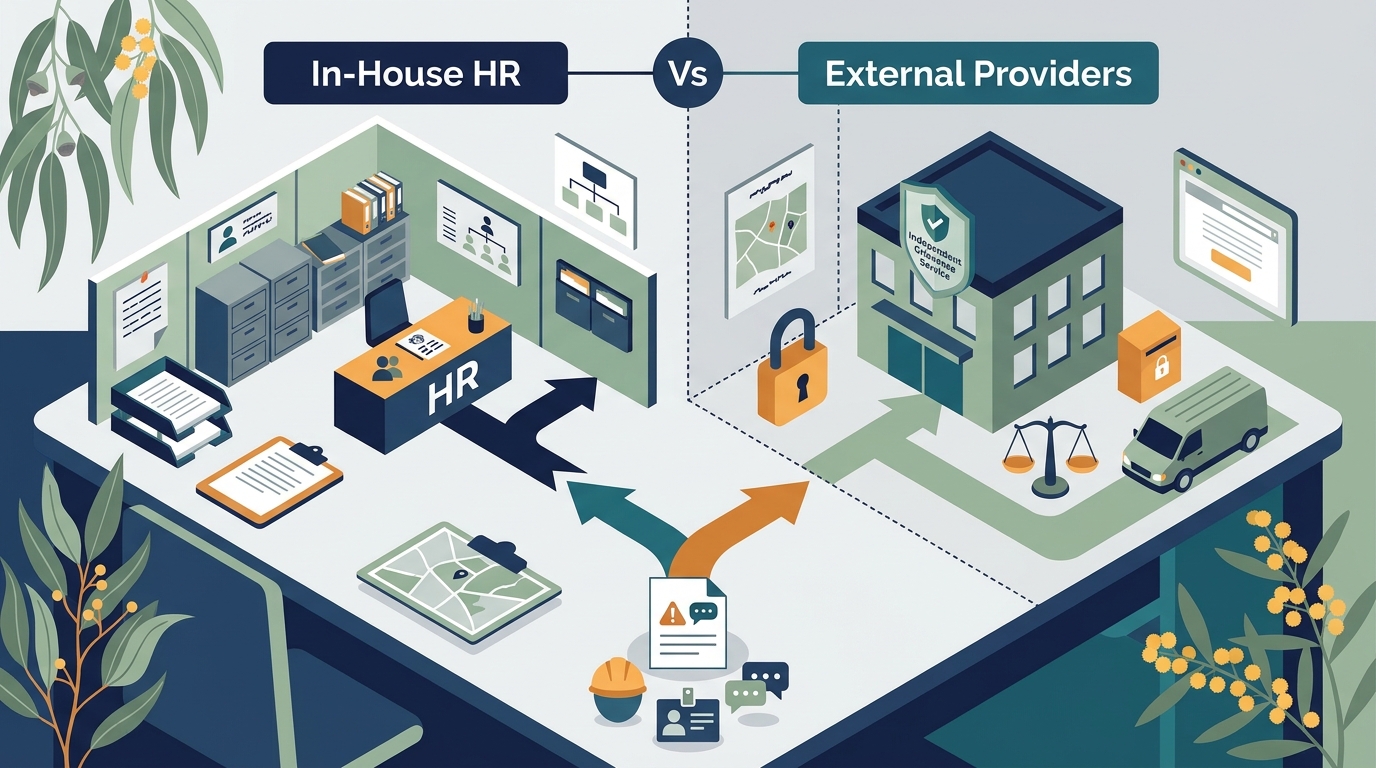
Managing grievance systems through internal Human Resources departments is the most common approach for mid-to-large Australian enterprises. The primary strength of this model is contextual awareness. Internal HR professionals understand the company culture, historical conflicts, and specific operational risks. This knowledge allows for faster, more nuanced resolutions that align with business goals.
However, the major limitation is the perception of bias. Employees may hesitate to report serious issues, such as harassment or exploitation, to the very management team that oversees their employment. This conflict of interest can undermine the trust required for a functional grievance system. Additionally, in-house teams may lack the specialized training in trauma-informed care or modern slavery compliance that external experts possess.
External Providers: Strengths and Limitations
The limitation of external providers is the potential disconnect from daily operations. Third parties may lack the granular understanding of internal workflows, which can lead to slower resolution times or recommendations that are difficult to implement. Furthermore, external services often come with higher upfront costs, which can be a barrier for smaller organizations.
Comparison of In-House and External Models
| Criteria | In-House HR | External Provider |
|---|---|---|
| Perceived Impartiality | Low to Moderate | High |
| Cultural Context | High | Low to Moderate |
| Specialized Expertise | Generalist | Specialist (e.g., Modern Slavery) |
| Cost Structure | Lower Long-Term | Higher Upfront |
| Speed of Resolution | Fast | Moderate |
| Trust for Sensitive Issues | Variable | High |
Choosing the Right Model for Your Business
Selecting the right approach requires a clear assessment of your organizational needs. The following guidance helps you determine which model aligns with your goals.
Choose In-House HR If
You should choose an in-house HR model if your organization has a strong, transparent culture and a dedicated HR team with specialized training. This model is best suited for businesses where the primary grievances are performance-related or procedural, and where the workforce already trusts the management team. It is also the most cost-effective option for long-term stability.
Choose an External Provider If
You should choose an external provider if your industry carries a high risk of modern slavery, exploitation, or serious misconduct. This model is ideal for businesses that need to demonstrate independent oversight to stakeholders, investors, or regulators. It is also the preferred choice for organizations that want to ensure a trauma-informed approach to sensitive grievances, such as those involving survivors of exploitation.
The Role of Ethical Frameworks in Grievance Design
For businesses looking to integrate ethical practices into their grievance systems, partnering with organizations that prioritize survivor involvement is a powerful step. This approach not only improves the quality of the grievance process but also demonstrates a genuine commitment to ending modern slavery in your supply chain and workplace.
Frequently Asked Questions
Can a business use a hybrid model for grievance systems?
Yes, many Australian businesses use a hybrid model where routine grievances are handled by in-house HR, while sensitive or high-risk issues are escalated to an external provider. This approach combines the efficiency of internal teams with the impartiality of third parties.
How does modern slavery compliance affect grievance design?
Modern slavery compliance requires that grievance mechanisms are accessible, confidential, and free from retaliation. Businesses must ensure that workers, including those in the supply chain, have a safe channel to report exploitation. External providers often bring the specialized expertise needed to meet these high standards.
What are the switching costs between in-house and external models?
Switching from an in-house to an external model involves the cost of onboarding a new provider and training staff on the new process. Switching back to an in-house model requires retraining HR staff and rebuilding internal trust. The primary cost is often the disruption to the workforce's trust in the system.
How can a business ensure its grievance system is trusted by workers?
Trust is built through transparency, consistency, and follow-through. Businesses should communicate the grievance process clearly, provide regular updates on the status of reports, and demonstrate that actions are taken based on the outcomes. Involving workers in the design of the system can also significantly improve trust.
Does The Freedom Hub provide direct grievance management services?
The Freedom Hub focuses on survivor recovery and ethical business training rather than direct grievance management. However, they provide resources and training that help businesses design ethical grievance systems that support survivors of modern slavery. You can learn more about their programs by visiting their website. Learn more: Contact Us The Freedom.