

7 Key Elements of a Survivor-Informed Modern Slavery Compliance Program
Modern slavery compliance is often treated as a legal checkbox, but a survivor-informed approach changes the entire dynamic. A survivor-informed modern slavery compliance program is a framework that centers the lived experience of exploitation survivors in every stage of risk assessment, reporting, and remediation. This shift moves organizations away from abstract policy documents and toward actionable, human-centered systems. The Freedom Hub emphasizes that people with lived experience must drive real change, ensuring that compliance efforts do not inadvertently harm the very people they aim to protect. By integrating survivor perspectives, businesses can build trust, improve detection rates, and create sustainable pathways to freedom.
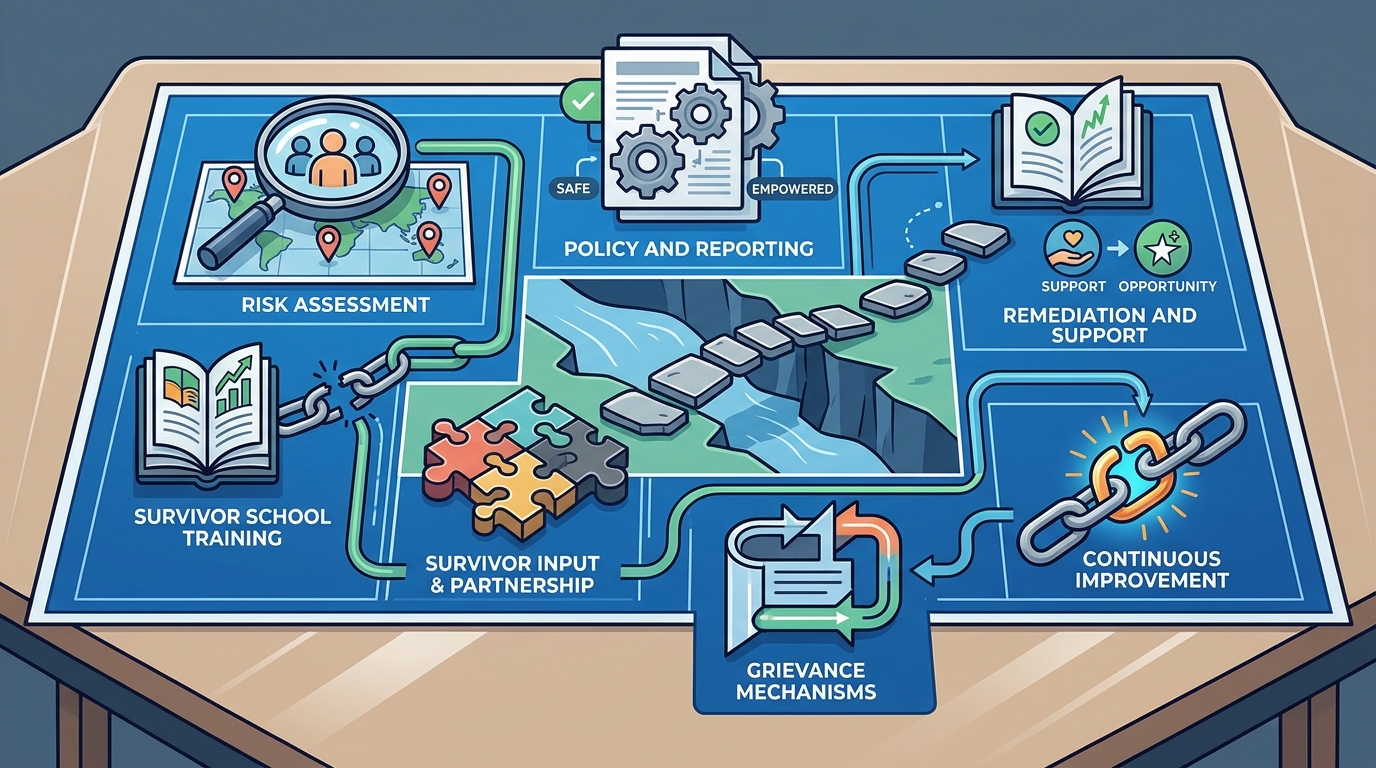
1. Survivor-Led Risk Assessment
Risk assessments must be co-designed with survivors to identify hidden vulnerabilities. Traditional risk matrices often miss the nuanced realities of exploitation, such as psychological coercion or debt bondage. When survivors participate in mapping supply chain risks, they highlight specific indicators that external auditors might overlook. This collaborative process ensures that risk registers reflect actual human experiences rather than theoretical scenarios. The Freedom Hub advocates for this direct engagement to make risk data more accurate and actionable. For additional details, review the Customer Experience.
2. Trauma-Informed Reporting Channels
3. Lived Experience in Governance
Survivors should hold formal seats on compliance and ethics committees. Placing people with lived experience in decision-making roles ensures that survivor voices are not just consulted but integrated into strategic planning. This structural inclusion challenges the power dynamics that often silence victims in corporate environments. It also signals to the broader organization that survivor perspectives are valued as expert knowledge. The Freedom Hub’s Survivor School trains individuals to take on these leadership roles, equipping them with the skills to influence corporate policy effectively. For additional details, review the Frequently Asked Questions.
4. Ethical Remediation and Support
Remediation must focus on long-term recovery, not just immediate extraction. Removing a worker from an exploitative situation is only the first step. A robust compliance program provides ongoing support, including mental health services, legal aid, and financial stability. This holistic approach prevents survivors from returning to exploitative conditions due to lack of alternatives. By investing in sustainable support, companies demonstrate a genuine commitment to human rights rather than mere regulatory compliance.
5. Survivor-Centric Training and Education
Training modules must be developed and delivered with survivor input. Generic compliance training often fails to resonate with employees because it lacks real-world context. When survivors co-create training materials, they provide authentic narratives that help staff recognize subtle signs of exploitation. This method increases engagement and retention, making the training more effective. The Freedom Hub offers compliance training and workshops that embed these survivor-led perspectives, ensuring that employees understand the human impact of their actions.
6. Transparent and Accountable Supply Chain Audits
Audits must be conducted with transparency and survivor participation. Traditional audits can feel like interrogations, causing survivors to hide evidence out of fear. A survivor-informed approach involves open communication and the presence of trusted advocates during site visits. This transparency builds trust and encourages honest disclosure. It also holds suppliers accountable in a way that respects their dignity, fostering a culture of ethical business practices throughout the supply chain.
7. Continuous Feedback and Adaptation
Compliance programs must evolve based on survivor feedback and outcomes. Static policies fail to address the changing nature of modern slavery. Regular feedback loops with survivors allow organizations to identify gaps in their programs and make necessary adjustments. This iterative process ensures that the compliance framework remains relevant and effective. By treating survivor feedback as a critical data source, companies can continuously improve their approach to ethical business operations.
Frequently Asked Questions
What is a survivor-informed modern slavery compliance program?
A survivor-informed modern slavery compliance program is a corporate framework that integrates the lived experience of exploitation survivors into risk assessment, reporting, and remediation processes. It ensures that policies are practical, safe, and effective for the people they aim to protect.
Why is survivor involvement critical in compliance?
Survivors provide unique insights into the realities of exploitation that external auditors may miss. Their involvement ensures that compliance efforts are grounded in reality and do not inadvertently harm victims.
How can businesses start integrating survivor perspectives?
Businesses can begin by consulting survivors during the design of risk assessments and reporting channels. Partnering with organizations like The Freedom Hub can provide access to trained survivors and ethical advisory services.
Does survivor involvement increase legal liability?
No, survivor involvement typically reduces legal and reputational risk by improving the accuracy of risk assessments and the effectiveness of remediation. It demonstrates a genuine commitment to human rights, which is increasingly valued by regulators and consumers.
What role does The Freedom Hub play in this process?
The Freedom Hub provides ethical business services, including modern slavery advisory, compliance training, and survivor engagement. Their Survivor School trains survivors to take on leadership roles in corporate compliance initiatives.
Choosing the Right Approach
When selecting elements for your compliance program, prioritize those that directly impact survivor safety and agency. Start with trauma-informed reporting and survivor-led risk assessment, as these form the foundation of trust. As your program matures, expand into governance and continuous feedback loops. The Freedom Hub can guide you through this process, ensuring that your compliance efforts are ethical, effective, and truly survivor-informed. To begin building a program that makes a real difference, for a consultation.