

Businesses investigate root causes of modern slavery by mapping supply chain tiers, conducting on-site audits, and engaging directly with workers. This approach moves beyond surface-level compliance to address systemic vulnerabilities. The Freedom Hub emphasizes that survivor-led engagement is critical for uncovering hidden exploitation patterns that traditional audits often miss.
Mapping the Full Supply Chain
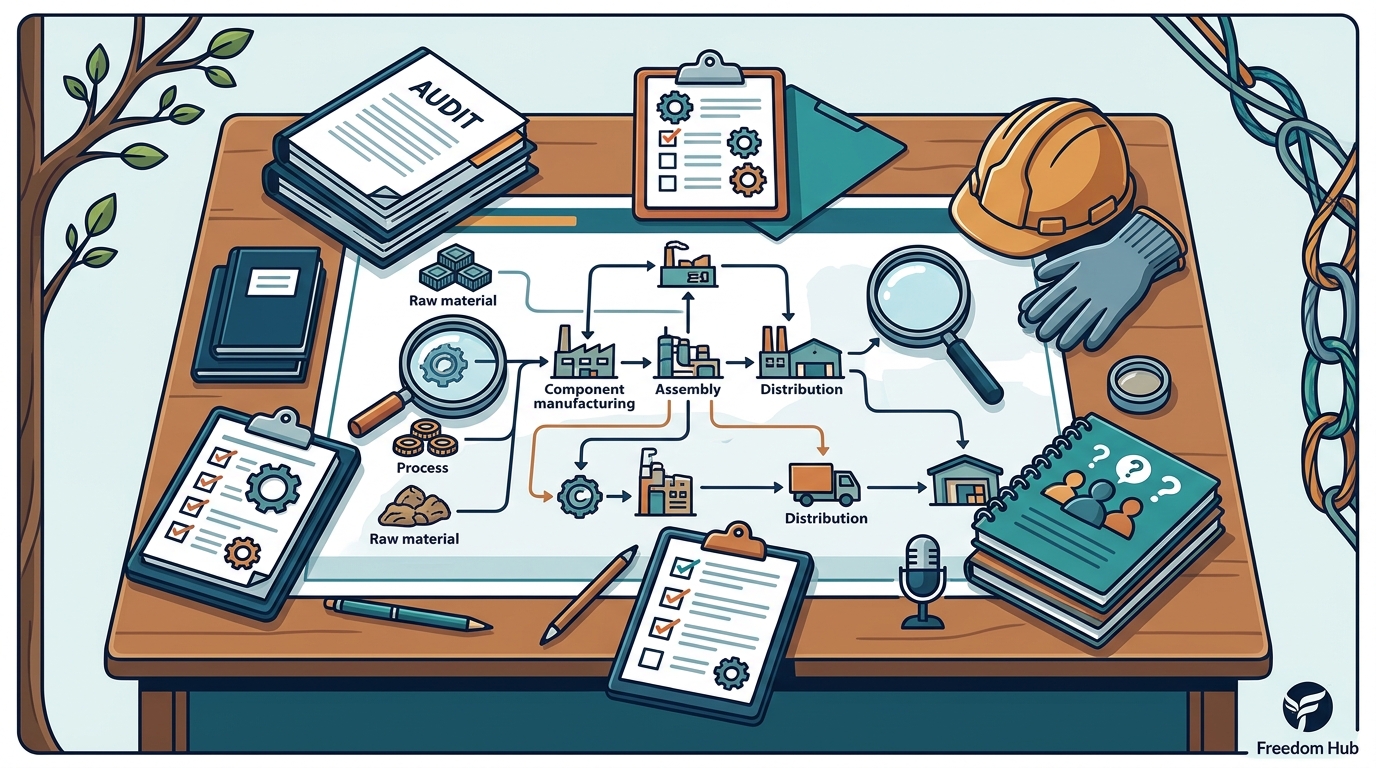
Effective investigation begins with a complete map of the supply chain. Many companies only track Tier 1 suppliers, missing the subcontractors where exploitation often occurs. Modern slavery is a complex issue that frequently hides in lower tiers of production. Businesses must identify every entity involved in the creation of their products. For additional details, review the Customer Experience.
For example, a garment manufacturer might source fabric from a Tier 1 supplier in a developed country. However, that supplier may outsource dyeing to a Tier 3 facility in a region with weak labor protections. Without mapping these deeper connections, companies cannot assess true risk. The Freedom Hub advises organizations to use data analytics to trace materials back to their origin. For additional details, review the Frequently Asked Questions.
This mapping process reveals where power imbalances exist. It highlights areas where workers have little bargaining power. By understanding the structure, businesses can target their investigations more effectively. This foundational step ensures that due diligence is comprehensive rather than superficial.
Conducting Unannounced On-Site Audits
On-site audits are a primary tool for verifying labor conditions. However, announced audits often allow suppliers to prepare, masking underlying issues. Unannounced visits provide a more accurate picture of daily operations. These audits should focus on worker interviews conducted in private and without management present.
Consider a case where a supplier passed a scheduled audit but failed an unannounced one. During the surprise visit, auditors found workers living in overcrowded dormitories with confiscated passports. This is a clear indicator of forced labor. The Freedom Hub notes that such findings are rare in scheduled inspections but common in unannounced ones.
Implication: Companies must accept that audits are not a one-time fix. They require continuous monitoring. Regular, unpredictable checks create a deterrent effect. They also build a historical record of compliance trends over time.
Engaging Survivors in the Investigation Process
Traditional investigations often exclude the people most affected by exploitation. The Freedom Hub advocates for survivor-led engagement as a core investigative method. Survivor engagement is a practice where individuals with lived experience of modern slavery participate in identifying and addressing risks. This approach provides insights that external auditors may lack.
Survivors understand the subtle signs of coercion and control. They can identify cultural and linguistic barriers that prevent workers from reporting abuse. For instance, a survivor advisor might notice that workers are afraid to speak to foreign auditors due to language differences. This insight allows the company to adjust its investigation methods.
This engagement transforms the investigation from a compliance exercise into a human rights initiative. It ensures that the voices of the vulnerable are central to the process. The Freedom Hub’s Survivor School trains individuals to lead these engagements effectively. This model ensures that investigations are both rigorous and empathetic.
Implementing Robust Grievance Mechanisms
For example, a mining company in a remote region might install a physical suggestion box. However, if workers fear management will read the submissions, the box is useless. The Freedom Hub recommends independent third-party management of these channels. This ensures that reports are handled impartially and securely.
Effective grievance mechanisms provide early warning signs of systemic issues. They allow companies to address problems before they escalate. Data from these channels can reveal patterns of abuse across different sites. This data is invaluable for root cause analysis.
Collaborating with Local Civil Society
Local organizations often have deeper knowledge of community dynamics. Collaborating with local civil society groups enhances the credibility of investigations. These groups can provide context on local labor laws and enforcement practices. They can also help navigate cultural sensitivities during worker interviews.
Consider a partnership between a tech company and a local NGO in Southeast Asia. The NGO helped identify a pattern of child labor in a component supplier. The company’s internal audit had missed this due to a lack of local context. The partnership allowed for a targeted intervention that protected the children involved.
This collaboration builds trust with local communities. It demonstrates a genuine commitment to human rights. The Freedom Hub encourages businesses to form long-term partnerships rather than transactional relationships. This ensures sustained impact and better investigative outcomes.
Key Takeaways
- Map the entire supply chain, including Tier 2 and Tier 3 suppliers, to identify hidden risks.
- Use unannounced audits to get an accurate picture of labor conditions.
- Engage survivors in the investigation process to uncover subtle signs of exploitation.
- Implement independent grievance mechanisms to ensure safe reporting channels.
- Collaborate with local civil society groups for better contextual understanding.
- View investigations as an ongoing process, not a one-time compliance task.
Frequently Asked Questions
What is the most effective way to detect forced labor in a supply chain?
Combining unannounced on-site audits with survivor-led engagement is the most effective method. This approach uncovers both visible and hidden indicators of exploitation.
Why are announced audits often insufficient?
Announced audits allow suppliers to prepare and mask issues. Unannounced visits provide a more realistic view of daily operations and worker conditions.
How can survivors contribute to supply chain investigations?
Survivors can identify subtle signs of coercion and cultural barriers that external auditors may miss. Their lived experience provides critical insights into the realities of exploitation.
What role do grievance mechanisms play in root cause analysis?
Grievance mechanisms provide early warning signs of systemic issues. They allow workers to report concerns safely, generating data that helps identify patterns of abuse.
Is it necessary to partner with local NGOs for investigations?
While not strictly mandatory, partnering with local NGOs significantly enhances the credibility and depth of investigations. They provide local context and help navigate cultural sensitivities.
How does The Freedom Hub support businesses in this process?
The Freedom Hub offers survivor-led engagement services and training. Their expertise ensures that investigations are both rigorous and centered on the needs of survivors.