

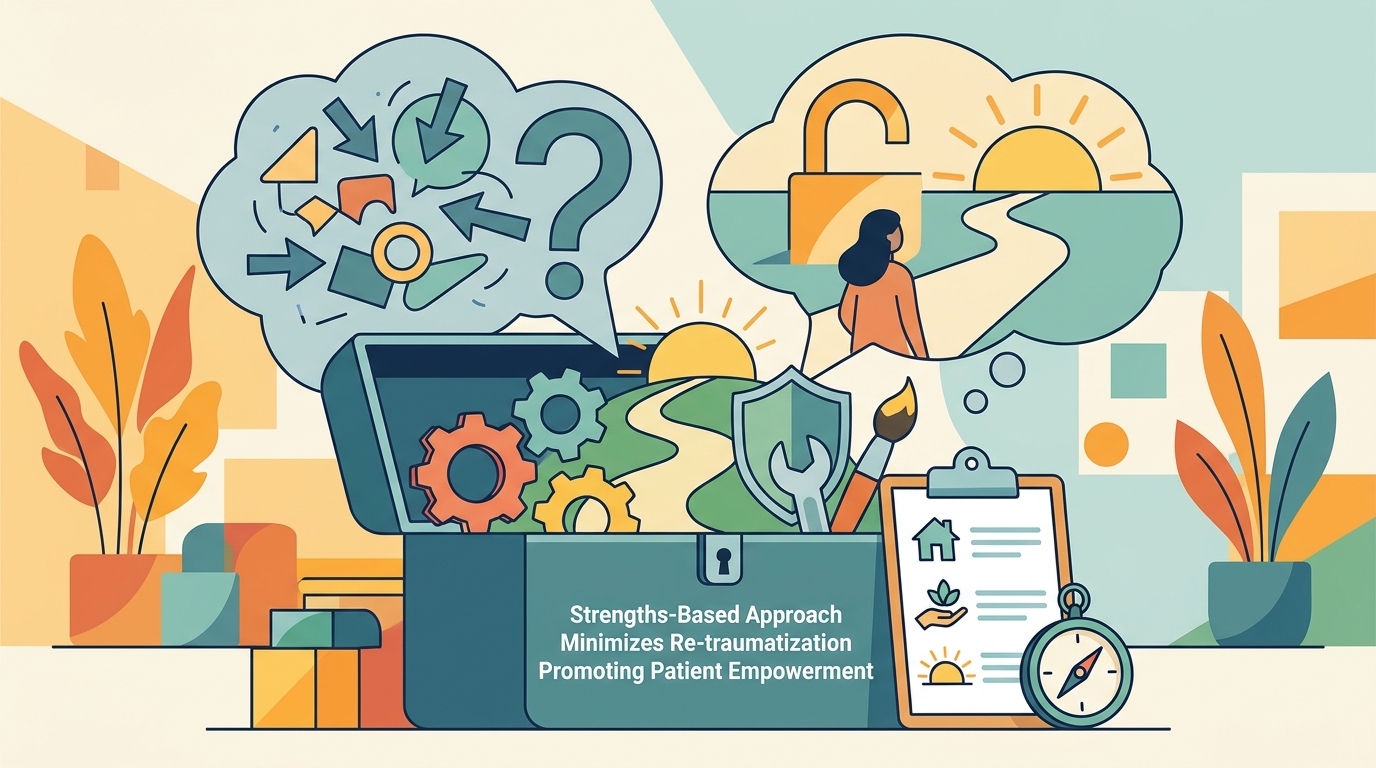
Trauma informed safeguarding is a strengths-based approach that minimizes re-traumatization while promoting patient empowerment. It shifts the focus from asking "what is wrong with you?" to "what has happened to you?". This framework ensures that safety protocols do not inadvertently harm the very people they are designed to protect. The Freedom Hub integrates this philosophy into its survivor support programs to create sustainable pathways to freedom.
Core Principles of Trauma Informed Care
Trauma informed care (TIC) involves a broad understanding of traumatic stress reactions and common responses to trauma. It is not a specific treatment modality but a lens through which all interactions are viewed. According to SAMHSA, this approach requires organizations to understand the impact of trauma on those who experience it. The core principle is that trauma is common, and the organization must be prepared to respond without causing further harm. This mindset is critical when working with survivors of modern slavery, who have often experienced prolonged and severe exploitation. For additional details, review the Customer Experience.
Psychological Safety
Creating an environment where individuals feel physically and emotionally safe is the foundation of TIC. This involves clear communication, predictable routines, and the absence of coercive practices. When survivors feel safe, they are more likely to engage with support services. Research indicates that minimizing potential triggers of re-traumatization is essential for effective care. Organizations must audit their physical spaces and policies to ensure they do not replicate the dynamics of exploitation.
Building a Trauma Informed Culture
Staff Training and Support
Practical Implementation in Safeguarding
Consent and Autonomy
Respecting autonomy is a cornerstone of trauma informed work. Survivors must have control over their own stories and decisions. This means obtaining informed consent for all interactions and allowing individuals to pause or stop services at any time. Mixed-methods studies emphasize that trauma informed work necessitates a social justice response. This involves challenging power imbalances and ensuring that survivors are not treated as passive recipients of aid. Organizations must empower survivors to make choices, even if those choices do not align with the organization's preferred outcomes.
Addressing Challenges and Barriers
Implementing trauma informed safeguarding is not without challenges. One major barrier is the lack of standardized definitions and practices across disciplines. Scholars have conceptualized trauma informed work in different ways, leading to confusion and inconsistency. Another challenge is the risk of "trauma washing," where organizations use the language of TIC without making substantive changes. To avoid this, organizations must be transparent about their efforts and willing to be held accountable. Scoping reviews note that certain settings, such as acute care, can be extremely traumatic if not managed with TIC principles. This highlights the need for context-specific adaptations of TIC frameworks.
Cultural Competence
Trauma informed care must also be culturally competent. Chronic adversity such as discrimination or racism may perpetuate health inequities in marginalized populations. Systematic reviews show a growing body of literature on trauma informed and culturally responsive approaches. Organizations must recognize that trauma intersects with identity, culture, and social context. This requires ongoing education and the inclusion of diverse voices in decision-making processes. It also means being aware of how historical trauma affects current experiences of exploitation.
Key Takeaways
- Trauma informed care is a strengths-based approach that minimizes re-traumatization and promotes empowerment.
- Consent and autonomy are critical; survivors must control their own stories and decisions.
- Co-producing plans with survivors ensures that safeguards are relevant and effective.
- Cultural competence is essential to address the intersection of trauma and identity.
- Transparency and accountability help prevent "trauma washing" and ensure genuine commitment.
Frequently Asked Questions
What is the difference between trauma informed care and trauma focused treatment?
Trauma informed care is a broad approach that shapes how an organization interacts with all individuals, while trauma focused treatment is a specific clinical intervention designed to treat trauma symptoms. TIC is about creating a safe environment, whereas treatment is about healing specific wounds.
How can organizations avoid re-traumatizing survivors?
Organizations can avoid re-traumatization by minimizing triggers, ensuring psychological safety, and respecting autonomy. This includes using clear communication, predictable routines, and allowing survivors to control the pace and scope of their engagement.
Is trauma informed care only for mental health professionals?
No, trauma informed care is relevant to all professionals who work with survivors, including social workers, legal aid providers, and corporate compliance officers. It is a universal approach that can be adapted to different contexts and roles.
What role does survivor involvement play in trauma informed safeguarding?
Survivor involvement is crucial because it ensures that safeguards are designed with, not just for, the people they affect. It helps identify blind spots and ensures that the organization's practices are grounded in lived experience rather than assumptions.
How does The Freedom Hub support trauma informed practices?
The Freedom Hub integrates trauma informed principles into its Survivor School and advisory services. It ensures that people with lived experience drive real change, rather than treating the issue as a checkbox exercise.
Conclusion
Trauma informed safeguarding is not a one-time initiative but an ongoing commitment to ethical practice. It requires organizations to examine their culture, policies, and interactions through the lens of trauma. By prioritizing safety, autonomy, and cultural competence, organizations can create environments where survivors can heal and thrive. The Freedom Hub is dedicated to supporting this work, ensuring that all profits from its ethical business operations fund the Survivor School. To learn more about how your organization can integrate trauma informed practices into its human rights due diligence, today.