

What should a grievance mechanism include to actually earn worker trust in Australia?
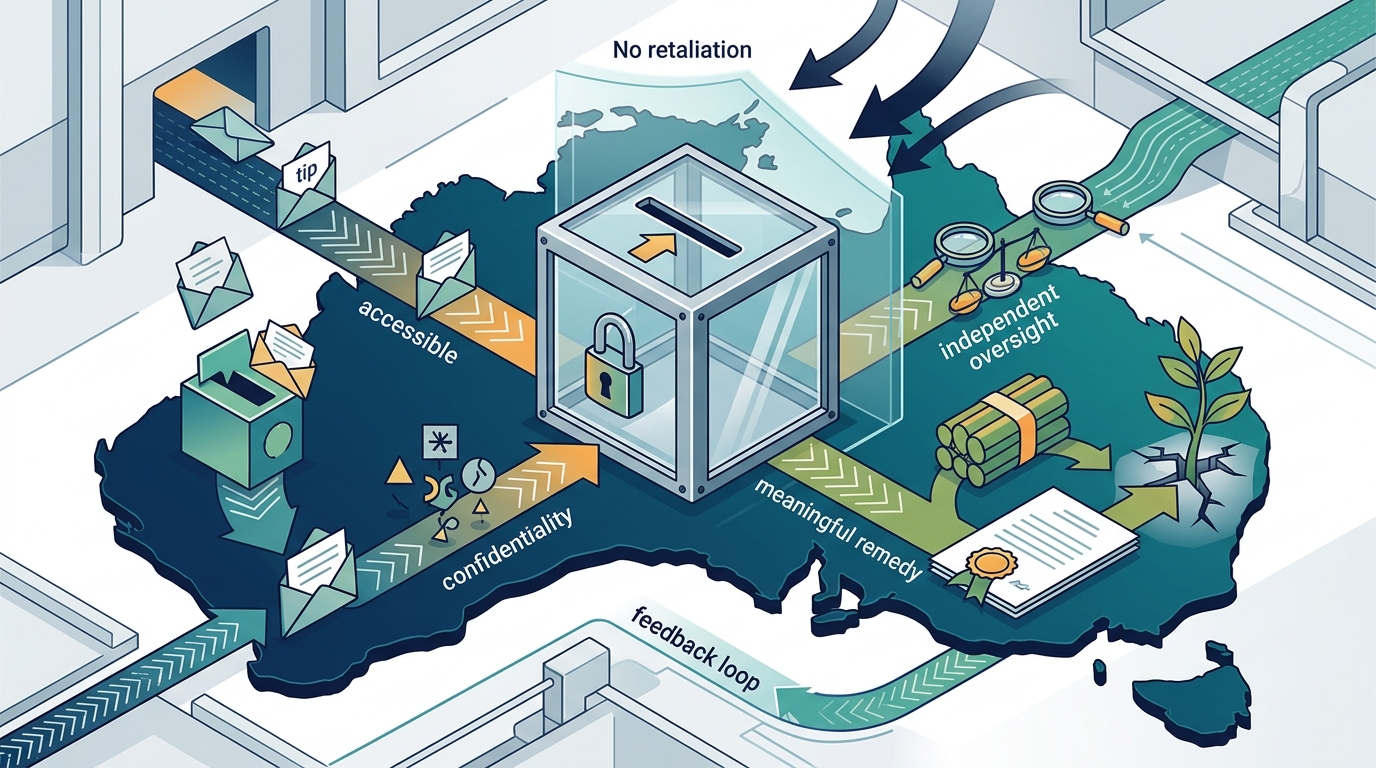
A trustworthy grievance mechanism in Australia must be accessible, confidential, and capable of delivering meaningful remedies without fear of retaliation. It requires clear communication, independent oversight, and a commitment to acting on feedback. The Freedom Hub emphasizes that survivor involvement and ethical business practices are critical to building this trust.
Accessibility and Low Barriers to Entry
For example, a factory worker in a regional area may not have reliable internet access. Providing a physical drop-box or a dedicated phone line ensures they have a channel to speak. The Freedom Hub advocates for removing these barriers to ensure no worker is silenced by logistical hurdles. For additional details, review the Customer Experience.
Confidentiality and Protection from Retaliation
Consider a case where a worker reported unsafe conditions. If that worker was subsequently shifted to a less desirable roster, trust in the system collapses. The Freedom Hub’s focus on survivor engagement highlights the importance of protecting those who speak up, ensuring their safety and dignity are prioritized above all else. according to ABA Disclosures and For additional details, review the Frequently Asked Questions.
Clarity in Process and Timelines
Uncertainty breeds anxiety. Workers need to know exactly what happens after they submit a grievance. A clear, step-by-step process with defined timelines reduces fear of the unknown. This includes acknowledging receipt, outlining investigation steps, and providing regular updates.
For instance, a mechanism might promise an initial response within 48 hours and a final resolution within 30 days. This transparency demonstrates respect for the worker’s time and concerns. The Freedom Hub’s compliance training workshops often stress the importance of clear communication in maintaining ethical standards.
Meaningful Remedies and Accountability
For example, if multiple workers report a specific safety hazard, the mechanism should trigger a facility-wide audit. The Freedom Hub’s incident response and remediation services focus on ensuring that actions taken are effective and sustainable, not just performative.
Independent Oversight and Survivor Involvement
Internal-only mechanisms often lack credibility. Independent oversight, such as a third-party audit or a survivor-led advisory board, adds legitimacy. Involving people with lived experience in the design and review of the mechanism ensures it addresses real-world needs. This approach moves beyond checkbox compliance to genuine ethical engagement.
The Freedom Hub’s Survivor School trains survivors to lead change, embedding their perspectives into business practices. This model demonstrates that trust is built when those most affected have a voice in the process. It transforms the mechanism from a corporate tool into a community-supported resource.
Key Takeaways
- Accessibility requires multiple channels, including non-digital options, to reach all workers.
- Strict non-retaliation policies are essential to protect workers who speak up.
- Clear timelines and process steps reduce anxiety and build confidence in the system.
- Independent oversight and survivor involvement enhance credibility and trust.
- Transparency in reporting outcomes demonstrates a commitment to accountability. according to ABA Disclosures and
Frequently Asked Questions
What is the most common reason workers do not use grievance mechanisms?
Fear of retaliation is the most common reason. Workers often believe that speaking up will lead to negative consequences for their employment or safety.
How can a business prove that its grievance mechanism is effective?
Businesses can prove effectiveness by publishing aggregate data on grievances, resolution rates, and systemic changes made. Independent audits also provide external validation.
Why is survivor involvement important in grievance mechanism design?
Survivors have lived experience of exploitation and can identify gaps that traditional compliance teams might miss. Their involvement ensures the mechanism is practical and empathetic.
What role does confidentiality play in building trust?
Confidentiality ensures that workers can raise concerns without fear of exposure. It is a fundamental requirement for any credible grievance mechanism.
How often should a grievance mechanism be reviewed?
Mechanisms should be reviewed annually or after significant changes in the workforce or operations. Regular reviews ensure the system remains relevant and effective.
Can a grievance mechanism be fully automated?
While automation can improve efficiency, it should not replace human interaction. Workers often need a personal connection to feel heard and supported.
Conclusion
Building a grievance mechanism that earns worker trust requires more than policy documents. It demands a culture of respect, transparency, and action. The Freedom Hub is dedicated to helping businesses implement these ethical standards. To learn more about how survivor engagement can transform your compliance efforts, today.