

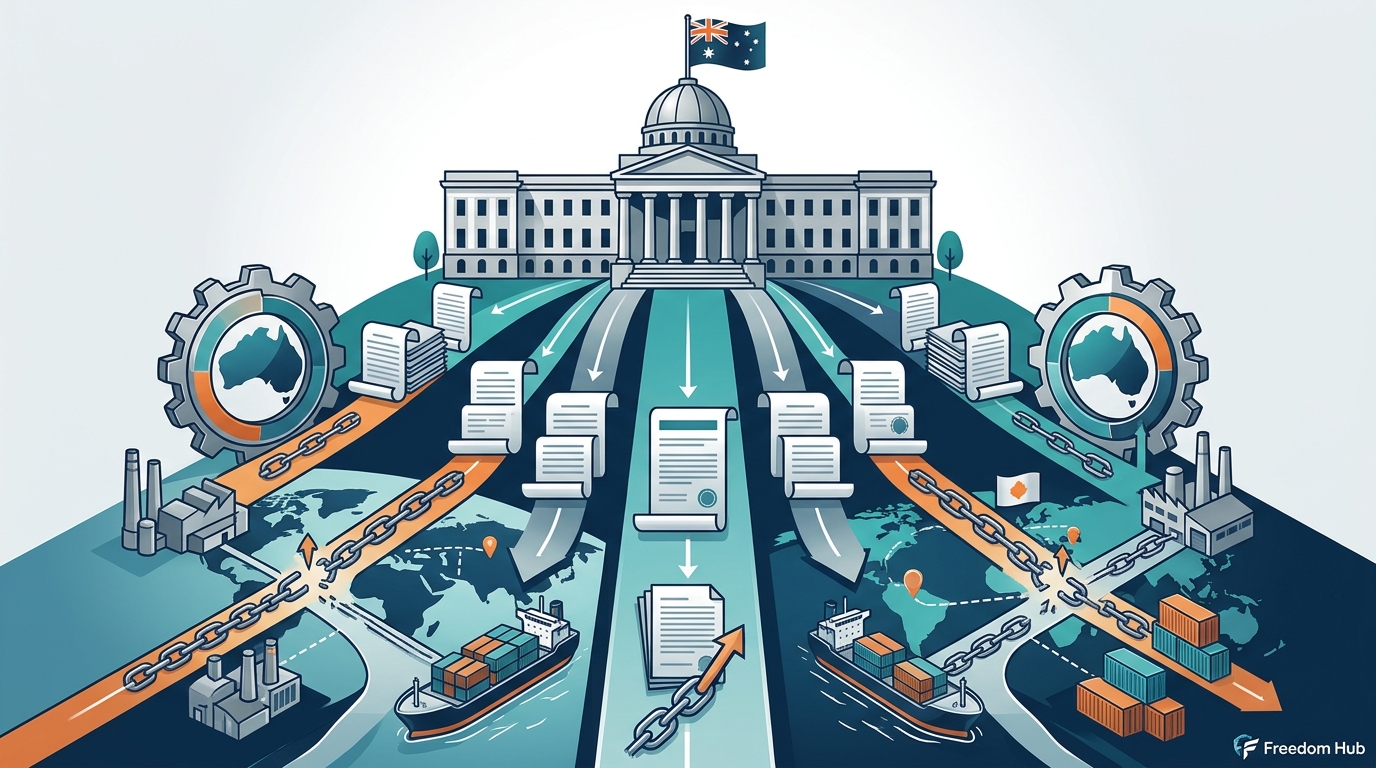
Australian businesses must navigate complex legal frameworks to prevent human rights abuses in their supply chains. The primary government resource is the Australian Government Department of Home Affairs, which administers the Modern Slavery Act 2018. This legislation requires large entities to report on risks in their operations and supply chains. Understanding these obligations is critical for maintaining ethical business practices and avoiding reputational damage.
The Legal Framework
The Modern Slavery Act 2018 is the cornerstone of Australia's approach to ending modern slavery in business. This legislation is a federal law that mandates transparency and accountability. It applies to entities that are reporting entities under the Act. These entities must prepare an annual statement on their actions to address modern slavery risks. For additional details, review the .
The Act defines modern slavery broadly. It includes slavery, servitude, forced labour, and human trafficking. Businesses must understand that these practices can occur anywhere in their supply chain. The Department of Home Affairs provides detailed guidance on these definitions. This ensures that companies are not just checking boxes but are genuinely addressing risks. For additional details, review the Customer Experience.
Reporting Requirements
Reporting entities must submit their statements to the Minister for Home Affairs. The statement must be lodged on the Modern Slavery Statement Register. This register is a public database that allows stakeholders to review corporate efforts. Transparency is a key component of this requirement. It helps build trust with consumers and investors who care about ethical sourcing. For additional details, review the Frequently Asked Questions.
Support Resources
In addition to the Department of Home Affairs, other government bodies provide relevant information. The Australian Human Rights Commission offers resources on human rights in the workplace. The Fair Work Ombudsman provides guidance on labour standards. These resources complement the Modern Slavery Act guidance. They help businesses create a comprehensive compliance strategy.
Practical Steps for Compliance
Businesses should start by mapping their supply chains. This involves identifying all suppliers and subcontractors. It also includes understanding the conditions under which goods and services are produced. The Australian Government recommends conducting due diligence. This process helps identify potential risks of modern slavery.
Key Takeaways
- The Modern Slavery Act 2018 is the primary legislation governing modern slavery in Australia.
- Reporting entities must submit annual statements to the Modern Slavery Statement Register.
- The Department of Home Affairs provides comprehensive guidance and resources for compliance.
- Supply chain mapping is a critical first step in identifying modern slavery risks.
- Transparency and accountability are key components of the Act.
- Training and workshops can help businesses develop effective compliance strategies.
Frequently Asked Questions
What is the Modern Slavery Act 2018?
The Modern Slavery Act 2018 is a federal law that requires large entities to report on modern slavery risks in their operations and supply chains.
Who is required to report under the Act?
Reporting entities, which are typically large businesses and government agencies, are required to report under the Act.
Where can I find guidance on the Act?
Guidance on the Act is available on the Department of Home Affairs website.
What should be included in a Modern Slavery Statement?
A Modern Slavery Statement should include the entity's structure, operations, and supply chains, as well as the risks of modern slavery in these areas.
How can businesses mitigate modern slavery risks?
Businesses can mitigate modern slavery risks by conducting due diligence, developing action plans, and regularly monitoring and reviewing their efforts.
Are there other government resources available?
How can The Freedom Hub assist with compliance?
The Freedom Hub offers training and workshops that can assist businesses with compliance. Their expertise in survivor engagement provides valuable insights into the realities of modern slavery.