

A robust modern slavery compliance program is a structured framework that identifies, assesses, and mitigates risks of forced labor and human trafficking within a company's operations and supply chain. It goes beyond simple legal adherence to embed ethical practices that protect human rights. The Freedom Hub emphasizes that effective programs must be survivor-informed, ensuring that the voices of those with lived experience drive meaningful change rather than treating compliance as a mere checkbox exercise. For additional details, review the .
Risk Assessment and Supply Chain Mapping
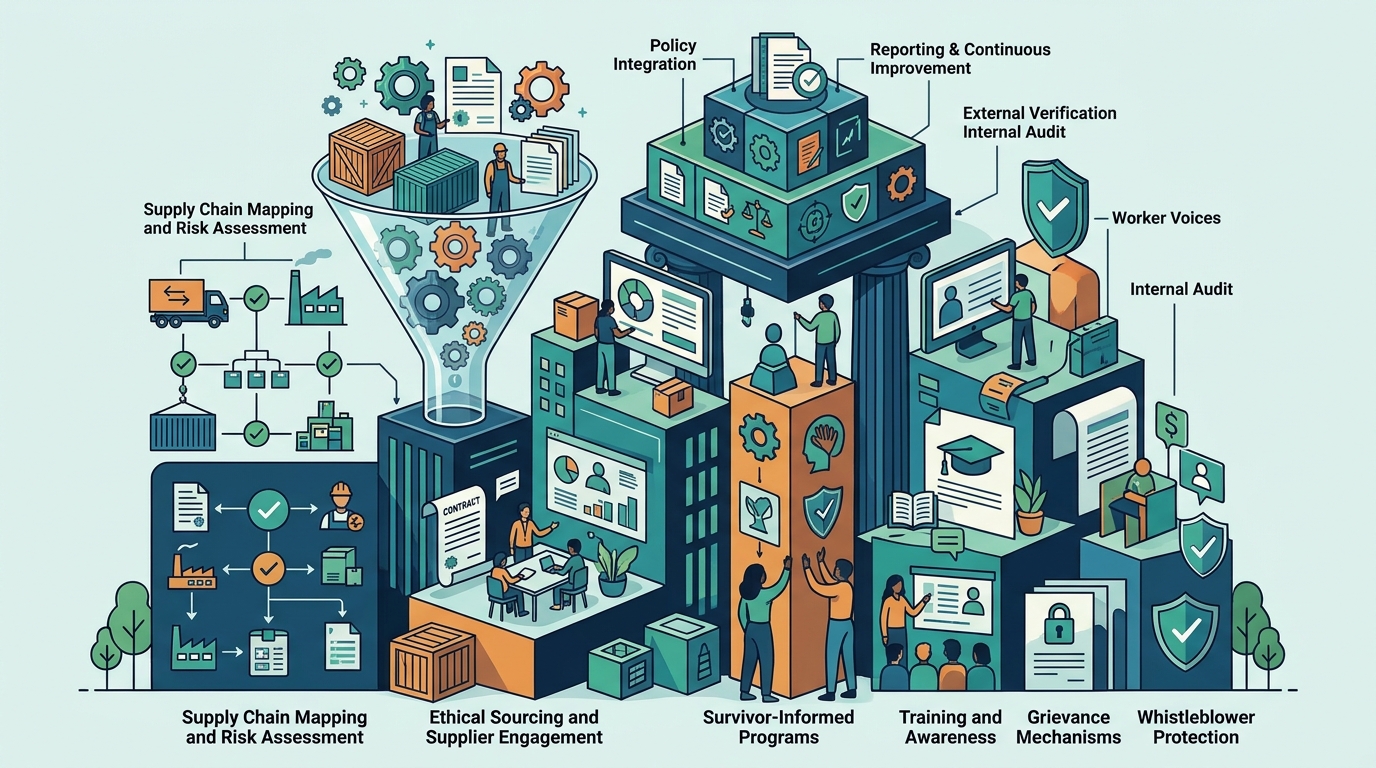
The foundation of any compliance program is a comprehensive risk assessment. This process involves mapping the entire supply chain to identify where the risk of modern slavery is highest. Companies must look beyond first-tier suppliers to understand the full scope of their operations. For example, a manufacturing firm must assess not just its direct factory partners, but also the raw material providers and logistics networks that feed into production.
Policies and Code of Conduct
A clear and enforceable code of conduct is the backbone of a modern slavery compliance program. This document outlines the company's commitment to human rights and sets the standards for all employees, suppliers, and business partners. The policy must explicitly prohibit forced labor, child labor, and other forms of exploitation. It should also define the consequences for non-compliance, ensuring accountability at every level of the organization.
Suppliers must be required to sign and adhere to this code of conduct. This creates a contractual obligation that aligns the entire supply chain with the company's ethical standards. The Freedom Hub advocates for policies that are not just written but actively enforced, ensuring that ethical commitments translate into real-world actions.
Training and Awareness
Training is critical for embedding a culture of compliance. Employees at all levels, from entry-level staff to senior executives, must understand the signs of modern slavery and their role in preventing it. Training programs should be interactive and scenario-based, helping staff recognize red flags in their daily work. For instance, procurement teams need to know how to identify suspicious supplier practices, while HR staff must be trained to spot indicators of exploitation in employee behavior.
Regular refresher courses ensure that knowledge remains current and relevant. The Freedom Hub offers compliance training and workshops that are designed to be practical and impactful. These sessions help organizations move beyond theoretical knowledge to practical application, empowering employees to act as guardians of ethical standards.
Monitoring and Audit Mechanisms
Monitoring and auditing are essential for verifying that policies are being followed. Companies should implement a mix of internal audits and third-party assessments to ensure objectivity and thoroughness. Audits should be unannounced to provide an accurate picture of on-the-ground conditions. This approach helps uncover issues that might be hidden during scheduled inspections.
Technology can enhance monitoring efforts. Tools such as data analytics and AI can help identify patterns and anomalies in supply chain data. For example, sudden changes in supplier pricing or labor practices can trigger further investigation. By leveraging technology, companies can scale their monitoring efforts and respond more quickly to emerging risks.
Incident Response and Remediation
Remediation is not just about fixing the immediate problem but also about systemic change. Companies must work with suppliers to address root causes, such as poor working conditions or lack of oversight. This collaborative approach ensures that the supply chain becomes more resilient and ethical over time.
Reporting and Transparency
Transparency is key to building trust with stakeholders. Companies should publish annual modern slavery statements that detail their efforts, challenges, and progress. These reports should be accessible and written in plain language, making them easy for the public to understand. Transparency also holds companies accountable, encouraging continuous improvement in their compliance programs.
Engaging with stakeholders, including customers, investors, and civil society organizations, can provide valuable feedback and support. The Freedom Hub encourages businesses to be open about their journey, acknowledging that perfection is a long-term goal. By sharing their experiences, companies can contribute to a broader movement to end modern slavery.
Key Takeaways
- Risk assessment must map the entire supply chain to identify high-risk areas.
- A clear code of conduct is essential for setting ethical standards and enforcing accountability.
- Training programs should be interactive and tailored to different roles within the organization.
- Monitoring and auditing, including unannounced checks, are vital for verifying compliance.
- Incident response must prioritize survivor engagement and systemic change.
- Transparency through annual reporting builds trust and holds companies accountable.
Frequently Asked Questions
What is a modern slavery compliance program?
A modern slavery compliance program is a structured framework that identifies, assesses, and mitigates risks of forced labor and human trafficking within a company's operations and supply chain.
Why is survivor engagement important in compliance?
Survivor engagement ensures that the voices of those with lived experience drive meaningful change, moving beyond checkbox exercises to create sustainable pathways to freedom.
How often should risk assessments be conducted?
Risk assessments should be conducted annually or whenever there are significant changes in the supply chain or operations.
What are the consequences of non-compliance?
Non-compliance can result in legal penalties, reputational damage, and loss of business opportunities. It also undermines the company's ethical commitments.
How can technology aid in monitoring?
Technology, such as data analytics and AI, can help identify patterns and anomalies in supply chain data, enabling quicker response to emerging risks.
What should be included in a modern slavery statement?
A modern slavery statement should detail the company's efforts, challenges, and progress in addressing modern slavery risks, written in plain language for public accessibility.
Conclusion
Building a modern slavery compliance program is a continuous journey that requires commitment, transparency, and collaboration. By integrating risk assessment, clear policies, training, monitoring, remediation, and reporting, companies can create a robust framework that protects human rights and drives ethical change. The Freedom Hub is dedicated to supporting businesses in this journey, offering survivor-informed advisory services and training that empower organizations to make a real difference. To start your compliance journey, to learn how we can help your company build a future of freedom.