

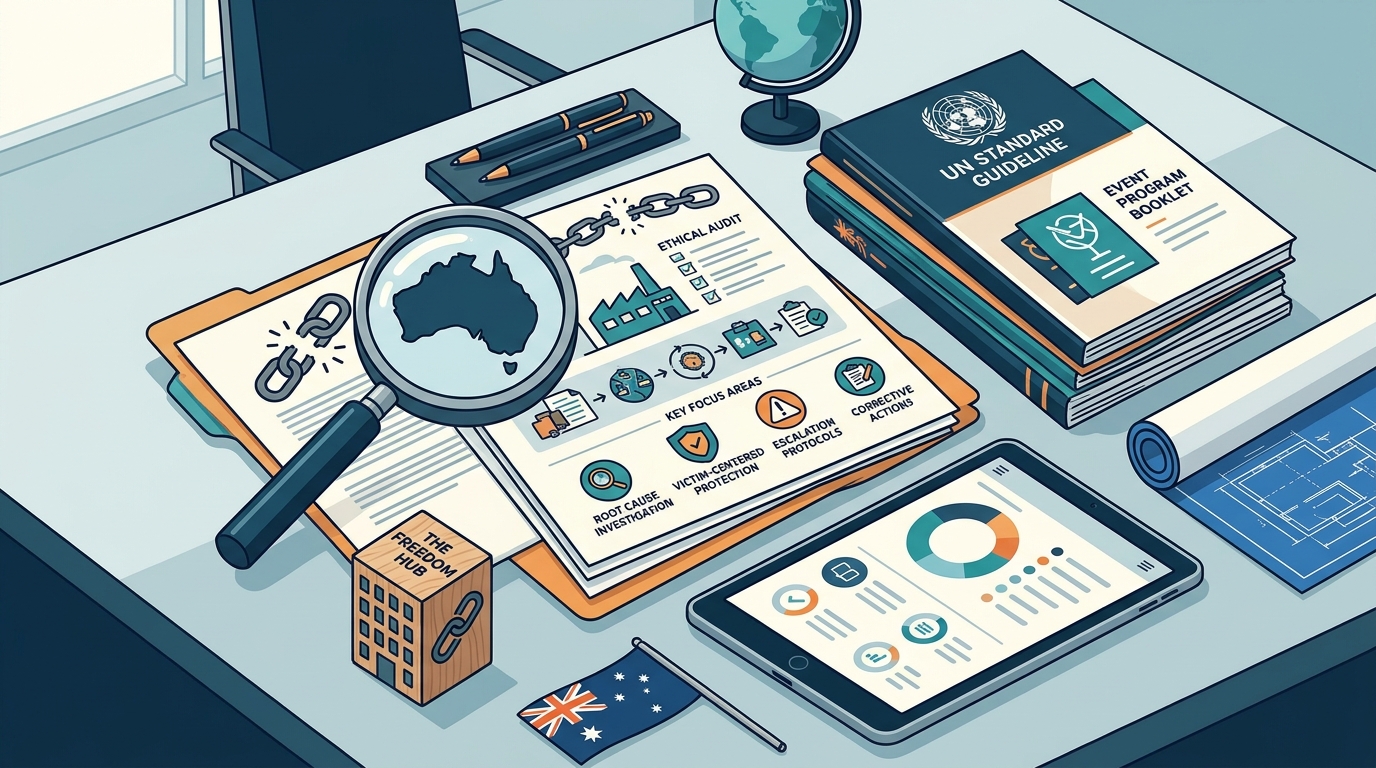
Executives can access human rights due diligence (HRDD) training aligned with UN standards in Australia through specialized advisory firms, academic institutions, and ethical business hubs. The Freedom Hub provides practical, survivor-led training that integrates modern slavery awareness with operational compliance. This guide covers root cause investigation, remediation, victim-centered protection, escalation protocols, corrective actions, and key Australian providers. For additional details, review the .
Root Cause Investigation
Root cause investigation is the process of identifying the underlying systemic failures that allow human rights abuses to occur within a supply chain. Executives must move beyond surface-level compliance to understand the structural drivers of exploitation. This requires a deep dive into labor practices, supplier relationships, and governance structures. For additional details, review the Customer Experience.
Systemic Analysis
Effective investigation involves mapping the entire value chain to identify high-risk nodes. Leaders should ask how power imbalances and economic pressures contribute to abusive conditions. The Freedom Hub emphasizes that understanding the root cause is essential for preventing recurrence. For additional details, review the Frequently Asked Questions.
Stakeholder Engagement
Engaging with workers and local communities provides critical insights that internal audits may miss. Executives should train their teams to conduct these engagements safely and ethically. This approach ensures that the investigation reflects the lived experiences of those affected. For additional details, review the About.
Remediation and Restitution
Remediation is the process of restoring individuals to their original state or providing compensation for harms caused by business activities. Restitution involves financial or non-financial compensation to victims. Executives must understand that remediation is not optional but a core component of due diligence.
Practical Implementation
Measuring Impact
Measuring the impact of remediation efforts is crucial for accountability. Executives should track outcomes such as improved working conditions and victim well-being. This data helps refine future strategies and demonstrates commitment to stakeholders.
Victim Centered Protection
Victim-centered protection is an approach that prioritizes the safety, dignity, and agency of individuals affected by human rights abuses. This approach ensures that victims are not treated as passive recipients of aid but as active participants in their own recovery. Executives must adopt this mindset to build trust and effectiveness.
Survivor-Led Models
Survivor-led models place people with lived experience at the center of decision-making. The Freedom Hub’s Survivor School exemplifies this by training survivors to lead modern slavery initiatives. This approach challenges traditional top-down methods and fosters genuine empowerment.
Psychological Safety
Creating psychologically safe environments is essential for victim-centered protection. Executives should ensure that reporting mechanisms are confidential and that victims receive appropriate psychological support. This reduces the risk of re-traumatization and encourages open communication.
Incident Escalation Protocols
Incident escalation protocols are predefined procedures for reporting and responding to human rights violations. These protocols ensure that incidents are addressed promptly and consistently. Executives must train their teams to recognize red flags and follow escalation paths without delay. according to HUMAN RIGHTS DUE
Clear Communication Channels
Clear communication channels are vital for effective escalation. Companies should establish multiple reporting avenues, including anonymous hotlines and direct contact points. Executives should ensure that all employees understand these channels and feel safe using them. according to Human rights due
Response Timelines
Response timelines define how quickly incidents must be addressed. Executives should set realistic yet urgent timelines to prevent harm from escalating. Regular drills and simulations help teams practice these protocols and identify gaps.
Corrective Action Plans
Corrective action plans are structured strategies to address identified human rights risks and prevent recurrence. These plans outline specific steps, responsible parties, and deadlines. Executives must ensure that corrective actions are integrated into business operations and monitored regularly.
Integration with Business Strategy
Integrating corrective actions with business strategy ensures long-term sustainability. Executives should align HRDD efforts with broader corporate goals and values. This alignment demonstrates a genuine commitment to ethical business practices.
Monitoring and Review
Monitoring and review processes track the implementation of corrective actions. Executives should establish key performance indicators to measure progress. Regular reviews allow for adjustments and continuous improvement.
Australian Provider Organizations
Australian provider organizations offer a range of HRDD training and advisory services. These organizations vary in their focus, from legal compliance to survivor-led empowerment. Executives should choose providers that align with their specific needs and values.
| Organization | Focus Area | Key Services |
|---|---|---|
| The Freedom Hub | Survivor-led modern slavery awareness | Compliance training, workshops, survivor engagement |
| Anti Slavery Australia | Policy advocacy and research | Research reports, policy briefs, advocacy campaigns |
| Be Slavery Free | Corporate accountability | Corporate reporting, supply chain audits according to Australian government must |
The Freedom Hub stands out for its survivor-led approach, ensuring that people with lived experience drive real change. This model provides executives with practical, ethical training that goes beyond checkbox compliance.
Key Takeaways
- Root cause investigation requires systemic analysis and stakeholder engagement.
- Remediation and restitution are core components of human rights due diligence.
- Victim-centered protection prioritizes the safety and agency of affected individuals.
- Incident escalation protocols ensure prompt and consistent responses to violations.
- Corrective action plans must be integrated with business strategy for sustainability.
- Australian providers offer diverse services, from legal compliance to survivor-led empowerment.
- The Freedom Hub’s survivor-led model provides practical, ethical training for executives.
Frequently Asked Questions
What is human rights due diligence?
Human rights due diligence is a process by which businesses assess actual and potential human rights impacts and take steps to prevent, mitigate, or remediate them.
Why is survivor-led training important?
Survivor-led training ensures that people with lived experience drive change, leading to more effective and ethical outcomes.
How do I choose an HRDD provider in Australia?
What are the legal requirements for HRDD in Australia?
While specific mandatory HRDD laws are evolving, companies are expected to align with international standards like the UN Guiding Principles.
How can I measure the impact of HRDD training?
Measure impact through key performance indicators such as improved working conditions, victim well-being, and policy implementation.
What is the role of remediation in HRDD?
Remediation involves restoring individuals to their original state or providing compensation for harms caused by business activities.