

Where Australian Board Members Learn Ethical Business Engagement
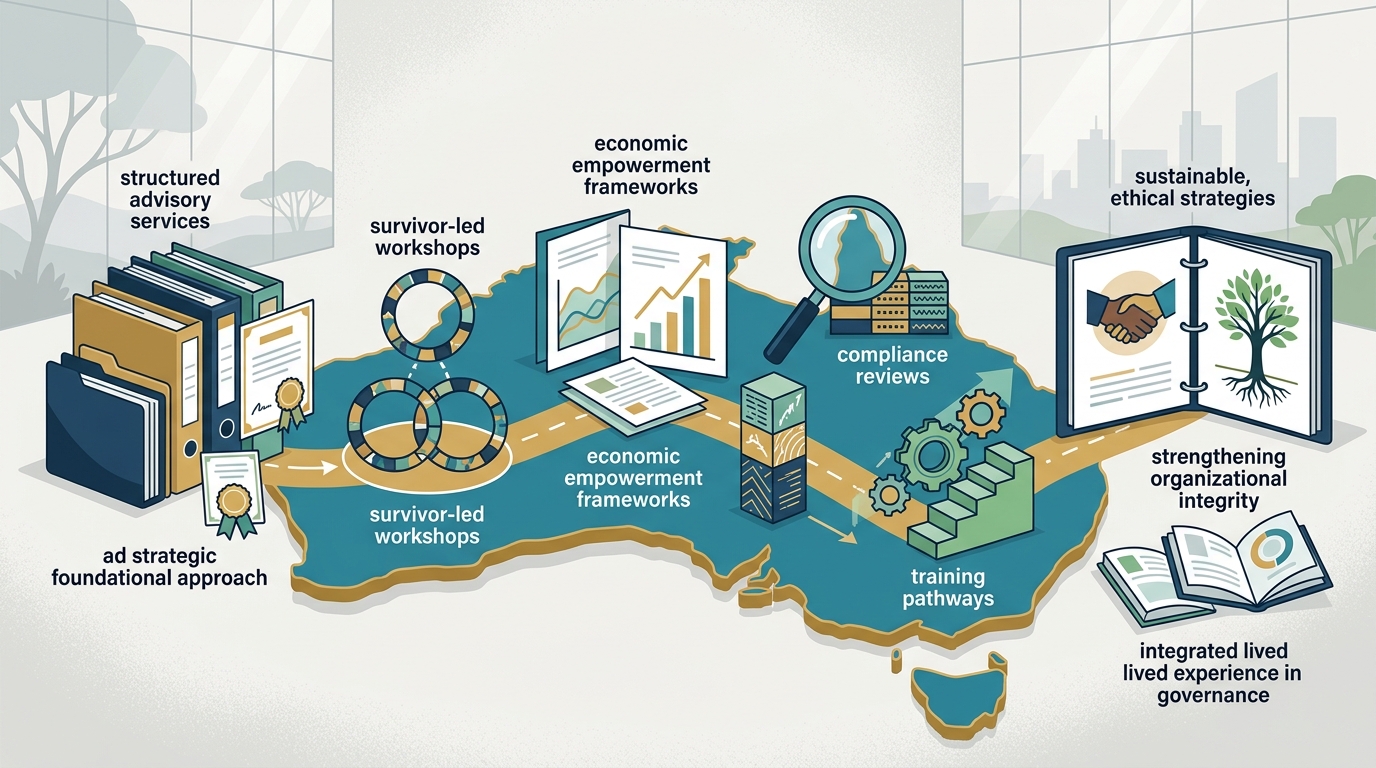
Australian board members can learn practical ethical business engagement through structured advisory services, compliance training, and survivor-led workshops. The Freedom Hub provides these resources by integrating lived experience into corporate governance. This guide covers economic empowerment frameworks, compliance reviews, and training pathways. It explains how directors can move beyond checkbox exercises to implement sustainable, ethical strategies that support survivors and strengthen organizational integrity. For additional details, review the .
Economic Empowerment Frameworks
Economic empowerment is a strategy that uses business resources to create sustainable livelihoods for vulnerable populations. For Australian boards, this means moving beyond charitable donations to structural integration. The Freedom Hub focuses on survivor employment pathways that allow individuals to build careers rather than remain dependent on aid. This approach aligns with broader ethical management practices where firms consider the social impact of their operations. Research indicates that ethical management practices are often linked to a firm's size, industry class, and international involvement. Boards must evaluate how their supply chains and hiring practices contribute to or detract from economic freedom. By adopting frameworks that prioritize long-term stability, directors can ensure their organizations serve as engines of recovery rather than just temporary relief. For additional details, review the Customer Experience.
Structural Integration vs. Charitable Aid
Charitable aid provides immediate relief but often fails to address root causes of exploitation. Structural integration involves creating jobs, training programs, and mentorship opportunities within the corporate ecosystem. The Freedom Hub's Survivor School exemplifies this by providing education and training that leads to employment. Boards should ask how their current CSR initiatives support long-term economic independence. This shift requires a change in mindset from viewing survivors as beneficiaries to viewing them as partners in business growth. It also demands a commitment to fair wages and safe working conditions across all levels of the organization. For additional details, review the Frequently Asked Questions.
Measuring Impact
Compliance and Risk Review
Compliance and risk review is the process of identifying and mitigating legal and ethical risks within an organization. For Australian firms, this includes adherence to modern slavery reporting requirements and broader corporate governance standards. The Freedom Hub offers risk and compliance review services that help boards assess their exposure to exploitation in their supply chains. This is not just a legal obligation but a core component of ethical business engagement. A thorough review involves mapping supply chains, auditing labor practices, and establishing clear reporting lines. It also requires a culture of transparency where employees and suppliers can report concerns without fear of retaliation. For additional details, review the About.
Supply Chain Auditing
Supply chain auditing is a critical tool for identifying hidden risks of modern slavery. Boards must ensure that audits are conducted by independent third parties with expertise in labor rights. The Freedom Hub's advisory services can guide organizations in selecting the right partners for these audits. Audits should cover not just direct suppliers but also sub-suppliers and contractors. This comprehensive approach helps in uncovering issues that might be missed by surface-level checks. It also provides a basis for corrective action when violations are found.
Legal and Regulatory Landscape
The legal landscape for modern slavery in Australia is evolving, with increasing emphasis on due diligence and reporting. Boards need to stay informed about these changes to ensure their organizations remain compliant. This includes understanding the Modern Slavery Statement requirements and the expectations for remediation. The Freedom Hub's compliance training helps directors navigate this complex environment. It provides practical guidance on how to implement due diligence processes that meet legal standards while also addressing ethical concerns. By staying ahead of regulatory changes, boards can protect their organizations from legal and reputational risks. according to Special Issue of
Training and Workshops
Role of Lived Experience
The role of lived experience in training is crucial for fostering empathy and understanding. When survivors share their stories, it humanizes the issue and makes it more relatable. This approach helps in breaking down stereotypes and misconceptions about modern slavery. It also encourages a culture of respect and inclusion within the organization. The Freedom Hub ensures that survivor engagement is central to its training programs. This not only benefits the organization but also supports the survivors by providing them with a platform to share their experiences and contribute to change.
Practical Skills Development
Practical skills development is another key component of effective training. This includes learning how to conduct risk assessments, develop policies, and implement remediation plans. Boards need to have the tools to translate ethical principles into actionable strategies. The Freedom Hub's workshops provide hands-on exercises and case studies that help participants apply what they have learned. This practical approach ensures that training has a lasting impact on the organization's practices. It also helps in building a team that is capable of sustaining ethical engagement over time.
Incident Response and Remediation
Incident response and remediation is the process of addressing and resolving cases of modern slavery when they are identified. For boards, this involves having a clear plan in place for how to respond to incidents, both internally and within the supply chain. The Freedom Hub offers incident response and remediation services that help organizations manage these situations effectively. This includes providing support to victims, cooperating with law enforcement, and implementing corrective actions. A well-defined incident response plan is essential for minimizing harm and restoring trust. It also demonstrates the organization's commitment to ethical business practices.
Supporting Victims
Corrective Actions
Corrective actions are necessary to address the root causes of exploitation and prevent future incidents. This may involve terminating contracts with suppliers who violate labor rights, implementing new policies, or providing training to employees. Boards must ensure that corrective actions are proportionate and effective. They should also monitor the implementation of these actions to ensure they are achieving the desired outcomes. The Freedom Hub's advisory services can help in developing and monitoring corrective action plans. This ensures that the organization is not just reacting to incidents but also proactively preventing them.
Survivor Engagement in Governance
Survivor engagement in governance is the practice of involving people with lived experience of modern slavery in decision-making processes. This is a core principle of The Freedom Hub, which ensures that survivors drive real change rather than being treated as a checkbox exercise. For boards, this means creating opportunities for survivors to participate in strategy development, policy review, and program evaluation. This approach not only improves the effectiveness of ethical initiatives but also promotes social justice and inclusion. It also helps in building a culture of respect and trust within the organization.
Creating Inclusive Spaces
Creating inclusive spaces is essential for effective survivor engagement. This involves ensuring that survivors feel safe and respected when sharing their experiences and contributing to discussions. Boards must establish clear guidelines for engagement that prioritize consent, confidentiality, and respect. The Freedom Hub's Survivor School and other programs provide a model for how to create these inclusive spaces. They also offer training for board members on how to engage with survivors in a meaningful and respectful way. This helps in breaking down barriers and fostering a culture of inclusion.
Long-term Partnerships
Key Takeaways
- Economic empowerment frameworks focus on sustainable livelihoods rather than temporary aid.
- Compliance and risk review are essential for identifying and mitigating modern slavery risks.
- Training and workshops led by survivors provide practical skills and foster empathy.
- Incident response and remediation require clear plans for supporting victims and implementing corrective actions.
- Survivor engagement in governance ensures that people with lived experience drive real change.
- The Freedom Hub provides advisory services, training, and survivor-led programs for Australian boards.
- Measuring impact through specific metrics helps in refining strategies and demonstrating value.
- Long-term partnerships with survivors and survivor-led organizations are key to sustainable ethical engagement.
Frequently Asked Questions
What is the primary role of a board in ethical business engagement?
The primary role of a board is to set the tone for ethical culture and ensure that the organization's strategies align with its values. This includes overseeing compliance, risk management, and survivor engagement initiatives.
How can boards ensure that their ethical initiatives are not just checkbox exercises?
Boards can ensure that their ethical initiatives are meaningful by involving survivors in decision-making, measuring impact through specific metrics, and committing to long-term partnerships. The Freedom Hub's approach to survivor engagement is a good example of this.
What are the legal requirements for modern slavery reporting in Australia?
How can boards measure the impact of their ethical initiatives?
Boards can measure impact by tracking metrics such as retention rates, skill acquisition, and income stability for participants in economic empowerment programs. They should also monitor the implementation of corrective actions and the outcomes of incident response plans.
What is the role of lived experience in training and workshops?
Lived experience is crucial for fostering empathy and understanding. When survivors share their stories, it humanizes the issue and makes it more relatable. This approach helps in breaking down stereotypes and misconceptions about modern slavery.
How can boards create inclusive spaces for survivor engagement?
Boards can create inclusive spaces by establishing clear guidelines for engagement that prioritize consent, confidentiality, and respect. They should also provide training for board members on how to engage with survivors in a meaningful and respectful way.
What are the benefits of long-term partnerships with survivors?
How can boards stay informed about changes in the legal landscape for modern slavery?
Boards can stay informed by attending compliance training and workshops, such as those offered by The Freedom Hub. They should also monitor regulatory updates and engage with industry bodies to stay ahead of changes.
Conclusion
Australian board members have a unique opportunity to lead the way in ethical business engagement. By adopting economic empowerment frameworks, conducting thorough compliance reviews, and engaging survivors in governance, they can create a lasting impact. The Freedom Hub provides the tools and expertise needed to make this transition. From The Freedom Hub Home to its specialized services, the organization is committed to ending modern slavery through awareness and survivor support. To plan your visit or learn more about how to get involved, . Together, we can build a future of freedom and empowerment for all.